BLOG POST
Online reviews are the most leveraged marketing asset a local business has in 2026, and the gap between businesses that treat them that way and businesses that don't has widened substantially over the past few years.
What changed: review platforms have become the de facto front door for local business discovery. Prospects search Google, read three or four reviews, look at the response patterns, check Facebook or a vertical-specific platform, and decide whether to call — often without ever visiting a website. AI-generated search answers now reference structured review data when making recommendations. Federal regulation arrived in October 2024 with the FTC's Rule on Consumer Reviews. Google's algorithmic enforcement of its review policy has tightened materially.
This guide covers what online reviews for businesses actually mean in 2026: which platforms matter and why, how reviews influence rankings and conversion, the compliance landscape every business operating in the US needs to understand, how to build a multi-platform review program that compounds, and the common mistakes that quietly stall growth.
An online business review is publicly visible feedback from a customer on a third-party platform — rated (typically 1-5 stars), optionally written, and tied to a verifiable account. The platforms that matter for local businesses, ordered roughly by impact for most verticals:
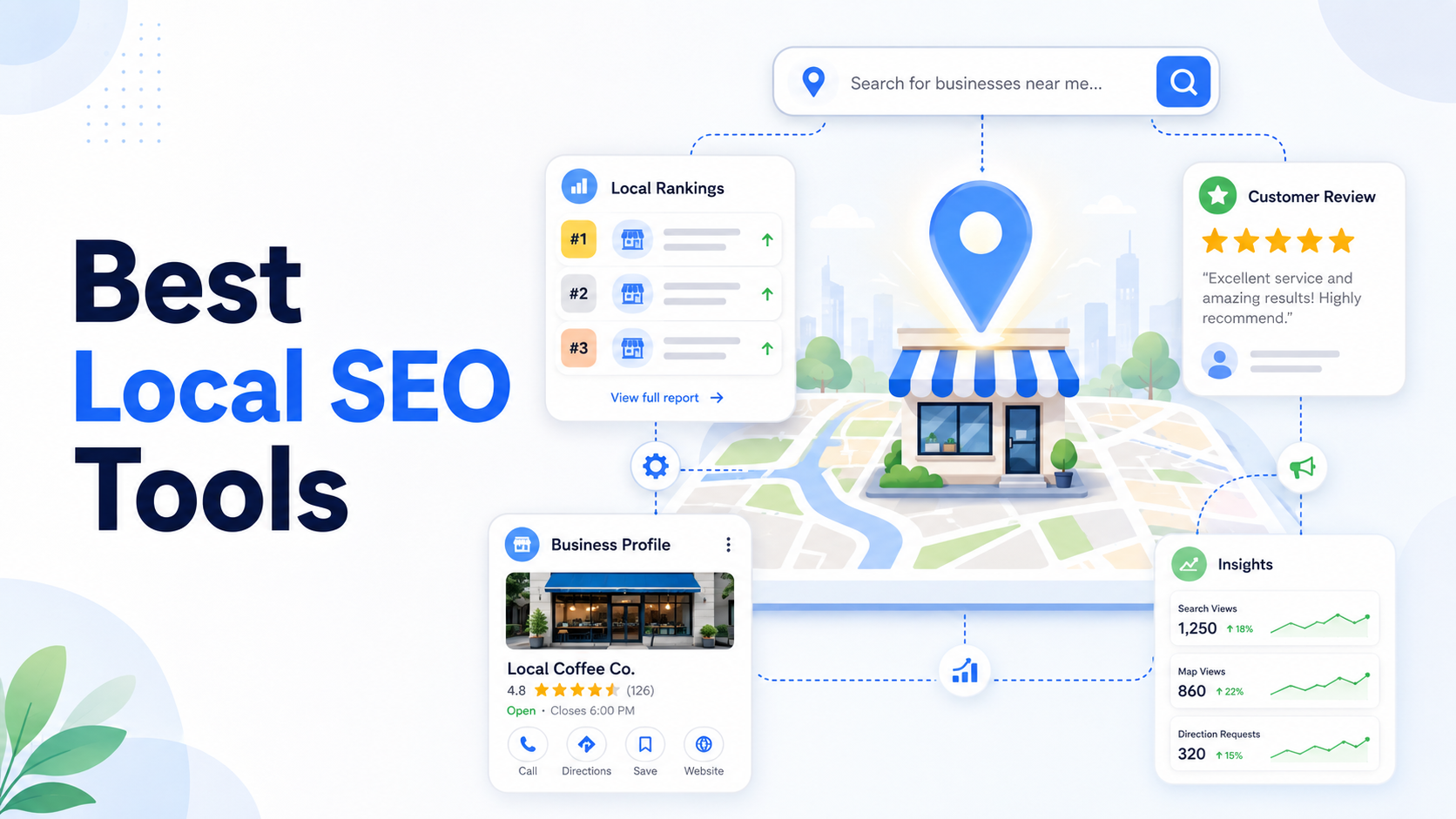
Google. Reviews on a business's Google Business Profile, displayed in Google Search, Google Maps, the local 3-pack, and increasingly in AI overviews. For most local businesses, Google reviews carry more weight than all other platforms combined — both because of distribution and because they directly influence Google's local search rankings.
Facebook. Reviews on a business's Facebook Page. Still meaningful for older demographics and certain service categories. Reduced in algorithmic weight over the past few years but still part of the trust signal mix.
Yelp. Drives meaningful traffic for restaurants, bars, dentists, and certain service trades. Strict solicitation policy (Yelp explicitly discourages asking for reviews and their algorithm filters reviews that look solicited) makes it a different operational beast than Google.
BBB. The Better Business Bureau still matters for trust-sensitive verticals (financial services, home services with high ticket sizes, contractors) and for prospects in older demographics who still check BBB before buying.
TripAdvisor. Critical for restaurants, hotels, and tourism businesses. Less relevant outside hospitality.
Industry-specific platforms. These often matter more within their verticals than the general platforms:
The right platform mix depends on the vertical. A medical spa needs Google plus Mangomint plus Healthgrades. A roofing contractor needs Google plus BBB plus Angi. A restaurant needs Google plus Yelp plus TripAdvisor plus OpenTable. The "one-size-fits-all" approach to review management is what produces mediocre results — the platforms that matter most in your vertical have outsized impact when you focus on them. Restaurants in particular benefit from purpose-built restaurant technology & feedback tools.
Reviews don't just sit on review platforms. They touch every part of how a local business grows. Five distinct mechanisms.
Google's local search algorithm uses review volume, recency, rating, and response rate as substantial ranking signals for the local 3-pack and Maps. A business with 200 recent reviews at 4.7 stars and active response activity outranks a competitor with 50 stale reviews at 4.2 stars, holding everything else equal. The 3-pack determines who shows up first when prospects search "near me" — and most searchers never scroll past it.
When a prospect lands on your Google Business Profile or website, they read reviews before they call. The conversion gap between a business with 80 recent reviews and a business with 12 old reviews is enormous, even when both businesses are otherwise identical. Reviews are how prospects calibrate whether you're worth their call.
When prospects ask AI assistants (ChatGPT, Bard, Perplexity, Google's AI overviews) for local recommendations, the AI doesn't visit your website to evaluate you — it queries structured business data, much of which comes from Google reviews. Weak review profiles are invisible to AI search the same way they're invisible to local pack search.
A pattern of negative reviews mentioning a specific staff member, a specific service line, or a specific time of day is real operational data. Businesses that systematically read their reviews catch problems weeks or months before they would surface through other channels — before the problem compounds into staff turnover, churn, or sustained ranking decline.
Customers who leave positive reviews become more invested in the relationship. Customers whose negative reviews get thoughtful responses often soften their position. Review-engaged customers retain at materially higher rates than unengaged customers.
The Federal Trade Commission's Rule on the Use of Consumer Reviews and Testimonials took effect in October 2024. It added federal-level penalties to practices that were previously only platform-level violations. Every business operating in the US that solicits or displays customer reviews needs to understand it. The Rule prohibits:
Civil penalties can reach into the tens of thousands of dollars per violation. The FTC has been actively enforcing the Rule since it took effect, with public actions against several reputation management companies in 2025.
The Rule isn't aimed at small local businesses doing things right. It's aimed at the ecosystem of fake-review services, reputation management firms that practice gating, and businesses that systematically suppress legitimate feedback. But the language is broad enough that gray-area practices — small "thank you" gift cards in exchange for reviews, "happiness survey" filtering before requesting public reviews, asking only happy customers — have meaningful exposure.
The platform-level rules layer on top: Google's review policy explicitly prohibits gating, incentives, and fakes. Yelp's algorithm filters solicited-looking reviews. Healthgrades and Avvo have industry-specific testimonial rules. For the full treatment, see our complete guide to review management.

TrueReview was built compliance-first. No review gating (which violates Google's policy and the FTC's 2024 Rule). Review Radar scans incoming reviews for Google policy violations and guides you through reporting. HIPAA-aware workflows for healthcare with BAAs available. Start a free 14-day trial.
The mechanics of building a review program that produces compounding results across multiple platforms, in 2026:
Before you change anything, document where you are. For each platform that matters in your vertical:
Most businesses are surprised by what they find. The gap between "I have a few hundred reviews" and "I haven't gotten a new review in four months and never respond to anything" is the gap between strong execution and atrophy.
The standard pattern: an automated request triggers immediately after each customer event — service completion, transaction, appointment, delivery. SMS for most local businesses (higher response rates than email); email for older demographics or longer narrative reviews. One initial request, one polite reminder 3-5 days later if no response, then stop.
Critical: ask every customer through the same workflow. Filtering customers based on satisfaction before asking is review gating — a direct violation of Google's policy and the FTC's 2024 Rule.
For most businesses, Google is the primary platform. Once Google is humming, layer in Facebook for older demographics and one or two vertical-specific platforms. Asking on more than three platforms simultaneously dilutes the ask and reduces response rate on each.
Every review — positive, neutral, and negative — gets a response within 24-48 hours. Universal response activity is a real ranking signal in Google's local algorithm, and it tells future prospects (who read your responses before they call) that you take feedback seriously.
Match tone to the review. Reference specifics. Don't get defensive on negative reviews — the audience for your negative-review response is every future prospect who reads the thread, not the original reviewer.
For a deep dive with 30+ ready-to-use templates, see our review response templates guide.
Some negative reviews aren't legitimate criticism — they violate Google's content policy (off-topic, conflict of interest, hate speech, spam patterns). These can be flagged for removal through Google's standard reporting process. For details on what's flaggable and how to flag effectively, see our guide to removing bad Google reviews.
Don't abuse the flag system — flagging legitimate negative reviews you simply disagree with downweights your future flag credibility and can attract scrutiny.
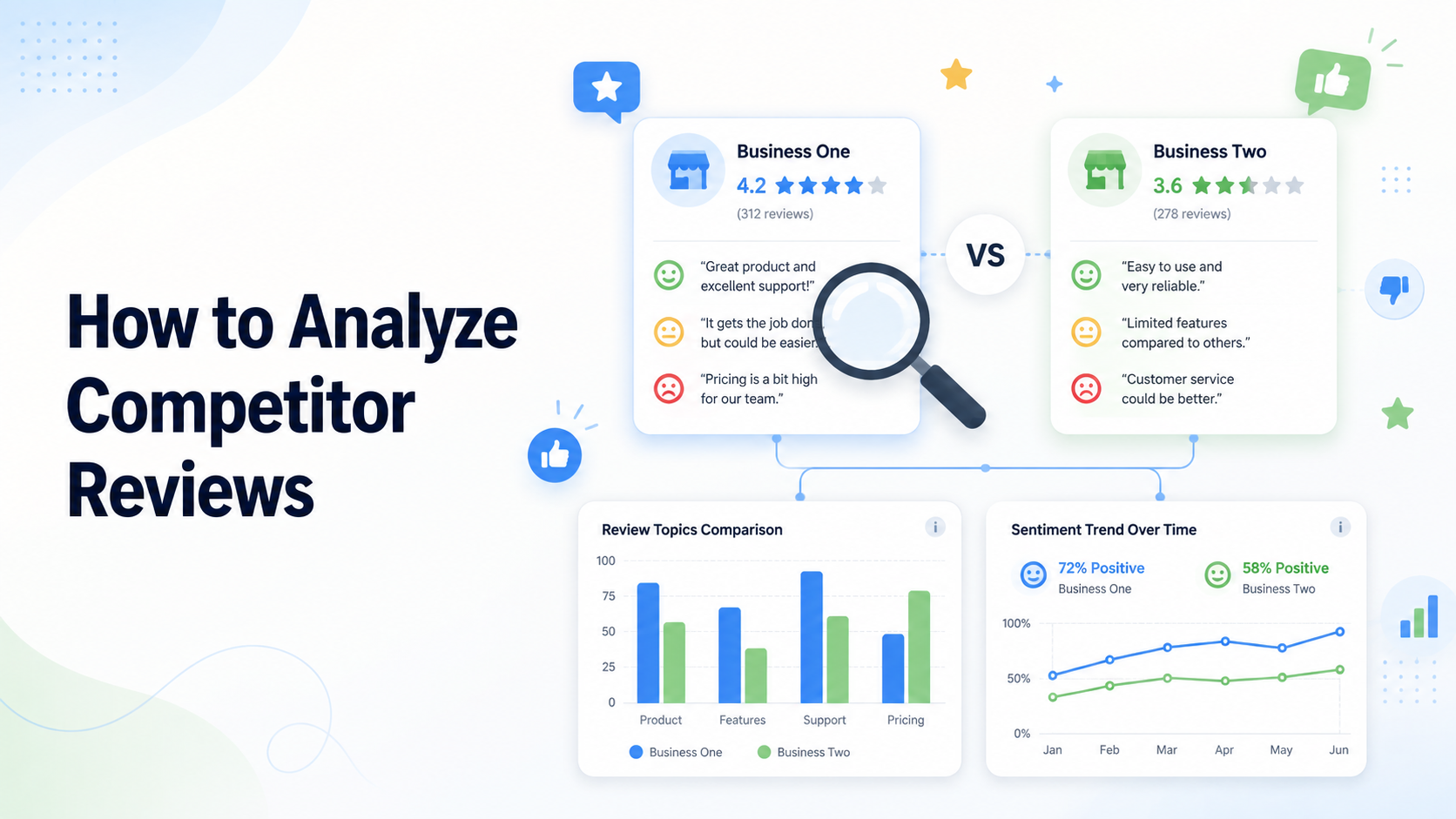
Track sentiment trends over time, by location, by service line, by staff member. Identify what's improving and what's regressing. Topic analysis — what reviewers consistently mention positively and negatively — is operational intelligence you can act on. Most businesses skip this step entirely; the ones that do it consistently pull ahead.
Each platform has its own quirks for how you earn and display reviews, so a one-size approach leaves some on the table. If you want the full playbook, read our guide on how to get reviews on google, facebook & yelp.
The targets that matter, based on what actually moves rankings and conversion:
Lifetime volume. Pass 100 reviews to break out of the "still building" perception bucket. Past 500, additional volume produces diminishing returns relative to recency and response rate.
Monthly velocity. 10-20 new reviews per month is the right baseline for most local single-location businesses. Below that, you fall behind on recency. Above 50 reviews per month for a small business can trigger Google's spam detection if the velocity is unnatural for your size and category.
Average rating. 4.5 stars and above is the comfort zone. 4.0-4.4 is acceptable but starts showing ranking pressure. Sustained sub-4.0 ratings demote profiles meaningfully.
Recency. Profiles with no new reviews in 90 days are demoted in local ranking regardless of lifetime count. Recency outperforms total volume as a signal after the first hundred or so reviews.
Response rate. 90%+ universal response activity is the target. Below 70% starts looking inconsistent.
Response time. Within 24-48 hours of posting. Anything past 72 hours signals disengagement.
Most businesses optimize for volume and ignore recency, response rate, and response time — which is why their numbers look fine on paper but rankings don't move. The compounding signal comes from the four operational metrics, not just the count.
The patterns that show up across businesses with weak review programs:
Single-platform focus. Putting all review activity on Google and ignoring Facebook, BBB, and industry-specific platforms leaves significant reputation surface unmanaged. Prospects research across multiple platforms; an empty Yelp or Healthgrades profile when prospects look there reads worse than the Google profile reads well.
Review gating. "How was your experience?" surveys that filter out unhappy customers before they reach the public platform. Direct violation of Google's policy and the FTC's 2024 Rule. Still widely practiced in the agency / reputation-management industry, which is why the FTC has been actively enforcing.
Offering incentives. "Leave a review and get $10 off your next visit." Even when the incentive isn't conditional on a positive review, it violates Google's policy and the FTC's Rule. Eventually triggers algorithmic detection.
Review trading. "You review my business and I'll review yours" arrangements between businesses. Specifically prohibited by Google's policy and most other platforms.
Buying reviews. Review-buying services produce reviews that fail Google's detection eventually. Profiles get hit with mass algorithmic removals; sustained patterns trigger suspension.
Inconsistent response activity. Responding only to positive reviews (looks selective), only to negative reviews (looks defensive), or only when there's time (looks performative). Universal response activity is what signals operational discipline.
Flag abuse. Trying to remove reviews you disagree with rather than reviews that violate policy. Google downweights flag credibility from accounts that submit too many unfounded flags.
Treating reviews as a marketing project, not operational discipline. "Marketing handles reviews" without a specific person, role, and metric attached means it gets handled when there's time. The businesses pulling ahead have someone accountable for each pillar on a recurring cadence.
Some negative reviews violate Google's content policy — off-topic content, conflict of interest, harassment, spam patterns. TrueReview's Review Radar feature scans your incoming reviews for these violations and guides you through reporting them to Google. (You do the reporting yourself, with guidance — Review Radar surfaces the issue, you decide what to do.) Start a free 14-day trial.
Collecting reviews is only half of it — the response rate on your profile is what prospects actually notice. For a full breakdown, see the google review software that actually gets replies.
You can manage online reviews manually. Many small businesses do. The question is whether manual is the right approach at your scale.
Manual works when: single location, fewer than 50 customer interactions per month, an owner actively involved in operations. Below that threshold, the overhead of setting up software exceeds the marginal benefit.
Manual breaks down when:
Software-driven review management means: requests trigger automatically based on customer events, reviews surface in a unified dashboard within minutes of posting, AI-assisted response drafts get human-reviewed before publishing, sentiment analysis and response metrics appear in real-time reporting, and compliance issues get flagged automatically.
For most local businesses past the early stage, software-driven is the natural evolution. For tool-specific guidance, see our comparison of Google review management software and our honest comparison of the major review platforms.
Some industries have additional layers that change how online reviews work.
Healthcare. HIPAA constrains what providers can say in responses. You can't confirm someone is a patient, reference specific treatments, or acknowledge specific visits. Healthcare review programs need workflow design that builds these constraints in. For deeper coverage, see our healthcare reputation management guide.
Legal services. Attorney-client privilege and state bar advertising rules constrain what attorneys can say in responses to client reviews. Most state bar rules require avoiding any disclosure that could violate confidentiality, even when responding to a former client's public review. For coverage, see our reputation management for criminal defense attorneys guide.
Financial services. Investment advisers operating under the SEC's 2021 Marketing Rule can use testimonials with appropriate disclosures. FINRA-regulated broker-dealers have additional constraints. State-specific testimonial rules add another layer.
Real estate. Zillow and Realtor.com reviews carry as much weight as Google for residential agents in most markets. For coverage, see our guide to Zillow and Realtor.com reviews.
Restaurants. Google + Yelp + TripAdvisor + OpenTable is the standard mix. Yelp's strict solicitation policy makes that platform a different operational beast. For coverage, see our guide to Google restaurant reviews.
Home services. Google + BBB + Angi + HomeAdvisor matter for trust-sensitive high-ticket work. Vehicle wraps, yard signs, and in-person review requests still drive volume here in ways they don't in digital-first verticals.
Salon, spa, and medical spa. Mangomint, Boulevard, and Vagaro reviews are vertical-native and carry meaningful weight inside the booking ecosystem. Google still primary, but the integrations matter.
Deeper coverage by topic and use case:
The pillar framework: our complete guide to review management covers the five-pillar operational framework (collect, monitor, respond, analyze, comply) in detail.
Google specifically: our complete guide to Google business reviews covers how Google's algorithm displays and ranks reviews. Our guide to Google Business Profile optimization covers the broader profile mechanics.
Asking and responding: our guide to asking for reviews covers the compliant request flow in depth. Our review response templates guide has 30+ ready-to-use templates organized by review type and industry.
Removing problematic reviews: our guide to removing bad Google reviews covers what can be flagged, how, and the alternative paths when flagging fails.
By industry: healthcare, legal, real estate, restaurants, Yelp specifically.
Five things to operationalize, in order of leverage:
Online reviews for businesses aren't a marketing tactic. They're an operational discipline that compounds over months into measurable gains in local search rankings, conversion rates, and customer retention. The businesses pulling ahead in their local market are the ones building structured multi-platform programs with someone accountable for each piece. The ones falling behind are still thinking of reviews as something marketing handles when there's time — or worse, quietly violating compliance and waiting for the enforcement that eventually arrives.
TrueReview automates compliant SMS and email review requests across Google, Facebook, Trustpilot, and 8+ vertical-specific platforms including Zillow, Realtor.com, Mangomint, Boulevard, and Vagaro. AI-assisted response generation with human-review workflow. Review Radar surfaces Google policy violations. HIPAA-aware workflows for healthcare, agency and multi-location support with white-label options. Start a free 14-day trial — setup takes about 15 minutes.