BLOG POST
You've landed on a business name you like. Before you spend money on a logo, domain, or LLC filing, you need to know it's actually available — legally and practically. "Available" is more complicated than most articles suggest. A name can be free at the state filing level and still be a federal trademark violation. It can be clear at the trademark office and still be unusable because someone has the domain or social handles. It can be perfect everywhere except Google, where an existing Business Profile with a similar name will quietly suppress your local rankings.
This guide walks through the six checks that actually need to happen before you commit to a name, in the order that makes sense, with the current 2026 procedural details (including the USPTO Trademark Search system that replaced TESS in November 2023, which most older guides still reference). The goal is for you to either confirm the name is genuinely usable across all the surfaces that matter, or to identify the specific conflict that's going to cause you problems — while you still have time to pivot.
The bar for "available" has risen significantly in the past decade. A new business in 2010 mainly needed to clear state filings and trademark. A new business in 2026 also needs to clear domain availability across multiple TLDs, social handles across 4-7 platforms, Google Business Profile name uniqueness, and the general "Googleability" of the name — whether prospects searching for your business will actually find you, or get drowned in results for an existing business with a similar name.
What changed: small businesses now compete primarily through digital surfaces, and every one of those surfaces has limited namespace. If your perfect business name is already a registered trademark, you have a legal problem. If it's already the dominant Google result for relevant keywords, you have a marketing problem. Both can be just as expensive to deal with after the fact, but only the first one gets you sued.
The good news: the checks themselves are mostly free, mostly fast, and finishable in a couple of hours if you do them in the right order. The bad news: most founders skip three or four of them and discover the conflict after they've registered the LLC, ordered business cards, and started marketing.
Run them in this order. Each builds on the last, and several of them can disqualify a name before you've invested in the harder checks.
Every state requires that registered business entities (LLCs, corporations, partnerships, etc.) have unique names within the state. The state agency that handles this is usually the Secretary of State, sometimes the Department of State or Department of Corporations.
The process:
This check usually takes 5 minutes per name. It's the cheapest and fastest disqualifier — do it first so you don't invest time in the harder checks for a name that's going to fail at the state level anyway.
Even if no registered legal entity has your name in your state, a local business may be operating under a "Doing Business As" (DBA) name — also called a fictitious business name (FBN), assumed name, or trade name depending on jurisdiction. DBA registrations happen at the county or city level, not the state level, so they won't show up in your state entity search.
Why DBAs matter: a business operating under a DBA has been using that name commercially, which means they have potential common law trademark rights in that geographic area. Even if you can technically register your LLC with the name, the local DBA holder may be able to prevent you from operating under that name in the same market.
The process:
Search your county clerk's records. Most counties offer an online DBA search. Search "[your county] DBA search" or "[your county] fictitious business name search." If your county doesn't have an online search, you may need to call or visit the clerk's office.
Search neighboring counties if you plan to operate across boundaries. A local plumbing business operating across three counties needs to check all three.
Check city-level filings where applicable. A few major cities (especially in California, New York, and Texas) have city-level business name registrations on top of the county level.
This check usually takes 10-30 minutes depending on how many jurisdictions you need to search. It's lower-stakes than the state check (a DBA holder rarely sues to prevent your registration), but it can save you marketing-confusion problems later.
This is the most important check from a legal exposure standpoint. A federally registered trademark provides nationwide rights to a name in connection with specific goods or services. If your business name is confusingly similar to a federally registered trademark in a related industry, you can be forced to stop using the name and potentially pay damages — even if you registered the LLC first.
The USPTO retired its old Trademark Electronic Search System (TESS) in November 2023 and replaced it with a new Trademark Search system at tmsearch.uspto.gov. Most older guides still link to TESS — that URL no longer works. The new system has different syntax, better search algorithms, and a more user-friendly interface, but the legal framework is the same: you're looking for federally registered or pending trademarks that conflict with your proposed name.
How to actually use the search:
The federal trademark check is the most legally consequential of the six. A federally registered trademark holder can force you to stop using your name nationwide, even years after you start. Don't skip this step or treat it as optional. For a definitive answer on close cases, talk to a trademark attorney before committing.

If you intend to grow the business beyond your local market, registering your own federal trademark protects your name nationwide. TrueReview itself is a federally registered USPTO trademark, which is what lets us defend the name when competitors file confusingly similar applications. For most local businesses, federal trademark registration is worth considering once revenue passes ~$250K/year or when expanding to multiple locations. Filing fees start at $250-$350 per class through the USPTO.
For most modern businesses, domain availability is the binding constraint — the check that most often kills an otherwise perfectly viable name. The .com extension still dominates for most categories. If the .com of your preferred name is taken (especially by an active business), you face a choice: pivot to a different name, pay potentially significant money to acquire the domain, or accept an alternative TLD knowing it will create friction for the rest of your business's life.
What to check:
The exact .com. Use any domain registrar (GoDaddy, Namecheap, Google Domains, Cloudflare Registrar) or the WHOIS lookup at lookup.icann.org to see if the domain is available. If it's registered, check whether there's an active website at that address — a parked domain might be purchasable; an active business website almost certainly isn't.
Industry-relevant alternative TLDs. If the .com is taken but inactive (parked, for sale, expired), consider whether the .co, .io, .ai (for tech), .law (for legal), .health (for medical), .net, or .[city] (e.g., .miami, .nyc) could work for your specific category. Local service businesses often do fine on the .com of "[businessname][cityname].com" or "[businessname]co.com" when the bare name is taken.
Common variants. If your business is "Brightway Plumbing," check brightwayplumbing.com, brightway-plumbing.com, brightwayplumbingco.com, brightwayplumbingllc.com. Common variant availability is usually the practical fallback.
If a domain is for sale, get a price. Premium domains run anywhere from $1,000 to $1,000,000+. Some "premium" listed domains are actually available cheaply (the seller is just speculating). Use a domain broker service like Sedo or DAN.com to make offers anonymously if you want to gauge interest without revealing identity.
Don't pay $50,000 for a premium domain when your business hasn't proven product-market fit yet. The "premium domain is worth it" stories you read are survivorship bias — for every success story, there are 100 founders who paid $20K+ for a domain and then folded the business in 18 months. A $12 domain on a slightly modified name is almost always the right starting point. You can buy the premium domain later if the business grows enough to justify it.
Modern customers expect to find your business on the platforms they already use. If your business name is "Brightway Plumbing" but @brightwayplumbing is taken on Instagram, @brightway is taken on TikTok, and twitter.com/brightway points to an inactive personal account from 2012, you have a marketing problem — not catastrophic, but real.
What to check:
The platforms that matter for your business model:
Restaurants, salons, beauty, fashion, fitness, retail: Instagram, TikTok, Facebook, YouTube. These are the primary discovery channels for visually-driven categories.
Service businesses, B2B, legal, healthcare, financial: LinkedIn, Facebook, Google Business Profile (covered separately below), YouTube. Some categories also need X/Twitter for industry conversation.
Real estate, home services: Instagram, Facebook, NextDoor, YouTube, plus vertical-specific platforms (Zillow, Realtor, Houzz, Angi).
The handle-availability checks themselves: visit each platform and try to register the handle. Most platforms will tell you immediately whether it's available. Tools like Namechk and KnowEm aggregate handle availability across dozens of platforms in one search, which is faster than checking each manually — though their data is sometimes stale, so verify the platforms that matter directly.
Consistent handles vs. unique handles. Ideally the same handle is available across all platforms (clean branding). If not, decide whether to (a) pick a different business name, (b) use modified handles on the platforms where the bare name is taken ("@brightway_plumbing" instead of "@brightway"), or (c) accept inconsistent handles across platforms. Most local businesses choose (b) with light modifications.
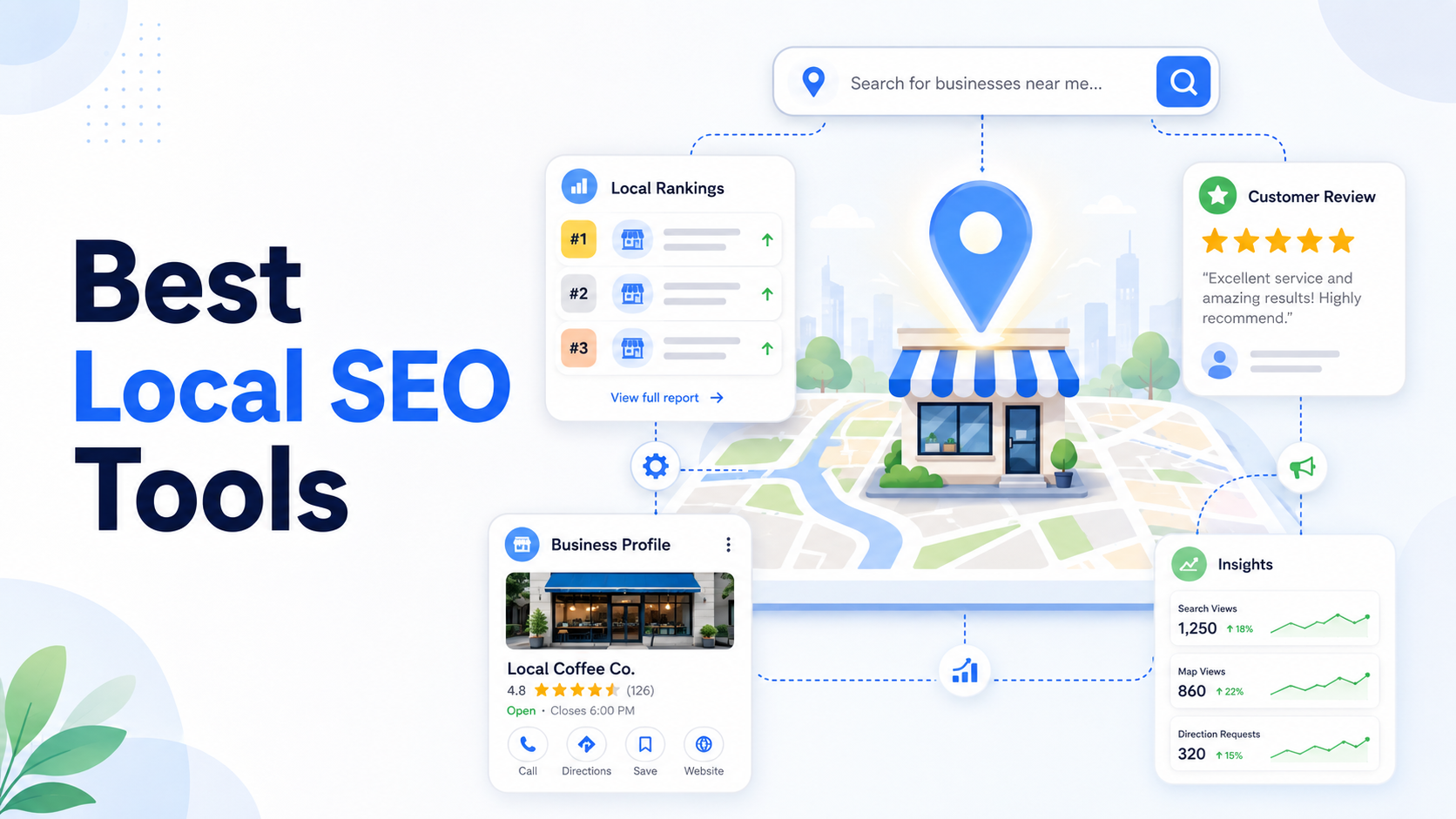
This is the check that's most directly relevant to TrueReview's domain, and the one most often skipped. Google Business Profile is the dominant local discovery surface; a conflict here can suppress your local rankings even when your legal name is perfectly clear.
The mechanics: when prospects search "[your business type] near me" or "[your business name]," Google's local algorithm decides which Business Profile to surface. If an existing business with a similar name in your service area already has an established Google Business Profile, your new profile may be:
Confused with theirs. Customer reviews intended for you may end up on their profile (or vice versa). Phone calls and direction requests may go to the wrong business.
Suppressed in local rankings. Google's algorithm may not understand that you're a separate business and rank you below the established profile.
Flagged for verification challenges. Google's automated systems may interpret your verification attempt as a duplicate of the existing profile and reject or delay it.
The checks:
Google your exact proposed name. See what comes up. If an established business with strong reviews and an active Google Business Profile shows up in the first page, that's a significant signal that the name is too contested.
Google your name + your city. "Brightway Plumbing Miami" will surface the local 3-pack and any existing businesses with that name in your area. Pay special attention to the local pack — that's where Google's local algorithm puts the businesses it considers most relevant.
Search Google Maps for your name in your service area. Maps surfaces businesses by name and proximity. A direct name conflict in your service area is the most likely cause of profile suppression after you launch.
Check that the name passes Google's Business Profile naming policy. Google requires your Business Profile name to match your real-world legal or operating name without descriptive keywords ("Best Plumber Miami"), location stuffing ("Plumbing Miami Florida"), or marketing copy. Names that violate these guidelines will get rejected during verification. See our complete guide to claiming your Google Business Profile.
Distinctive names are dramatically easier to rank for than generic ones. "Brightway Plumbing" is much more rankable than "Miami Plumbing Services" because the latter competes against every plumbing-related search in your city, while the former is unique enough to dominate searches for your exact name. Distinctive doesn't mean weird — it means unique enough that Google can clearly identify your business. For deeper coverage of local search and review-driven discovery, see our complete guide to Google business reviews.
If any of the six checks surfaces a conflict, the decision tree depends on the type of conflict:
State entity name taken. Try modified versions ("Brightway Plumbing Services LLC" instead of "Brightway Plumbing LLC"). Each state has different "distinguishable" standards — a minor variation may or may not work. Call your Secretary of State for clarification before filing.
DBA conflict in a different geographic area. Often acceptable if the businesses don't compete in overlapping markets. A "Brightway Plumbing" DBA in upstate New York probably doesn't prevent you from operating "Brightway Plumbing" in Miami. Get legal advice if you're uncertain — common law trademark rights can extend further than expected.
DBA conflict in the same geographic area. Material problem. Common law trademark rights typically attach to the business that used the name first in the geographic market. Don't proceed without legal advice.
Federal trademark conflict. The most serious. If a federal trademark exists for a confusingly similar name in your industry class, do not proceed without legal advice. Most attorneys will tell you to pivot. Pursuing a name despite a federal trademark conflict can result in forced rebrand, damages, and attorney fees.
Domain taken (active). Either pivot the name or accept an alternative domain. Negotiating the purchase of an actively-used .com is sometimes possible but typically expensive ($5,000-$500,000+).
Domain taken (parked or for sale). May be cheaply purchasable through a domain broker. Make a low offer through Sedo or DAN.com first; most parked domain owners will accept $1,000-$5,000 even if the listing says higher. Don't reveal you're building a business around the name (sellers will price accordingly).
Social handles taken. Almost always solvable with handle modifications (underscores, "official" suffix, etc.). Rarely a reason to abandon a name unless the existing handle is on an active, similar business that customers might confuse with yours.
Google Business Profile conflict. If the conflicting business is in your service area and the same category, strongly consider pivoting. The marketing friction of trying to rank against a confusingly similar profile is significant. If the conflict is in a different geographic market or category, usually fine.
While the basic procedure is similar across all 50 states, some states have meaningful differences in process, cost, or rules. The ones worth knowing:
Delaware. Default choice for many businesses planning national scale. Strong corporate law, sophisticated entity search at icis.corp.delaware.gov. Name reservation costs $75 for 120 days. Quirky: Delaware allows considerable latitude in business names but has strict rules about restricted words (e.g., you can't use "bank," "trust," or "insurance" without specific approval).
California. Largest state by business volume. Entity search at bizfileonline.sos.ca.gov. Name reservation is free for 60 days through their online system. California also requires county-level DBA filing if you operate under a name different from your legal entity name.
Texas. Entity search at mycpa.cpa.state.tx.us, though Texas Secretary of State (sos.state.tx.us) is the official source for entity records. Texas has a "deceptively similar" name rejection standard that's relatively strict.
Florida. Entity search at search.sunbiz.org. Florida is one of the easier states to register a business in; the online portal is fast and the rules are reasonable. Florida also has an active DBA system at the state level (rather than county level) for most filings.
New York. Entity search at apps.dos.ny.gov. New York requires that LLCs publish their formation in two local newspapers for six consecutive weeks — an expensive quirk that can add $1,000+ to formation costs in NYC and Long Island. Check this before forming an LLC in New York.
Wyoming and Nevada. Sometimes recommended for asset protection. Both states have decent online search tools and relatively low fees. The asset-protection benefits are real but often overstated for small businesses.
For business name registration purposes specifically, the state you're going to operate in matters more than which state you're going to form in. If you operate in New York but form in Delaware, you'll need to register as a foreign entity in New York, which requires the name to be available in both states.
Once you've confirmed availability across all six checks and registered the business, the next moves matter for whether the name becomes a strong brand or stays generic:
Register the domain immediately. Even if you're not building a website yet, lock down the .com. Domain hijackers monitor business name registrations and will snipe matching domains expecting you'll pay to recover them later.
Claim social handles across the platforms you'll use. Same logic. Reserve the handle even if you're not actively posting yet.
Claim your Google Business Profile. Once you have a business address (even a home address with a hidden display), claim the profile. Setting up early starts the verification clock and lets Google index your business name. See our complete guide to claiming your Google Business Profile.
Set up basic NAP consistency. Your business name, address, and phone number need to be identical across Google, Yelp, Facebook, BBB, and the major directories. Inconsistencies hurt local rankings. For the full local marketing setup, see our complete local online marketing framework.
Plan your review acquisition program from day one. Review velocity is the single most reliable predictor of local Google ranking improvement, and the businesses that start asking for reviews from day one outperform competitors that wait until they have "enough customers." See our complete guide to getting Google reviews.
Consider federal trademark registration once you're established. If the business grows beyond a single local market, federal trademark protection becomes meaningful. USPTO filing fees start at $250-$350 per class. Most small businesses don't need this in year 1, but it's worth budgeting for as the business scales.
Once you've cleared the name and registered the business, the next steps are setting up customer acquisition:
Claiming and verifying your Google Business Profile: our complete guide to claiming your Google Business Profile.
Optimizing the profile once claimed: our complete guide to Google Business Profile.
The local marketing framework: our complete local online marketing framework and our advertising and customer acquisition playbook.
Building a review program from day one: our complete guide to getting Google reviews and our complete guide to review management.
The businesses that start asking for reviews from their first ten customers outperform competitors who wait until they have "enough" reviews to feel comfortable asking. TrueReview automates compliant Google review requests via SMS and email after each customer event, integrates with Mangomint, Boulevard, Vagaro, Zillow, Realtor.com, and 8+ other booking and CRM platforms, surfaces incoming reviews in real time, and includes AI-assisted response generation. Start a free trial — setup takes about 15 minutes.