BLOG POST
Online presence management is the ongoing work of shaping how your business shows up everywhere a potential customer might find it — your website, your Google Business Profile, your reviews, your social channels, and the search results that frame all of it. It is less a single task than a discipline: the steady, deliberate management of the impression your business makes online, across the handful of surfaces where buying decisions actually get made.
For a local business, the stakes are concrete. Someone searching for a lawyer, a dentist, a contractor, or a restaurant near them forms an opinion in under a minute — from your star rating, your review count, the recency of your reviews, your photos, and whether your information is consistent across the web. Online presence management is how you make sure that minute goes your way. This guide breaks the discipline into its core pillars, explains why the reviews-and-reputation layer carries more weight than the rest, and lays out a practical way to manage it without hiring an agency.
"Online presence" is a broad phrase, and that breadth is part of why the topic feels overwhelming. It helps to break it into the pillars that genuinely move the needle, rather than treating every possible channel as equally important.
Your website is the one surface you fully own. It needs to load fast, work on mobile, clearly state what you do and where, and rank for the searches your customers actually run. For most local businesses, the highest-leverage SEO work is local — making sure your name, address, and phone number are consistent everywhere and that your pages target the right city-and-service terms.
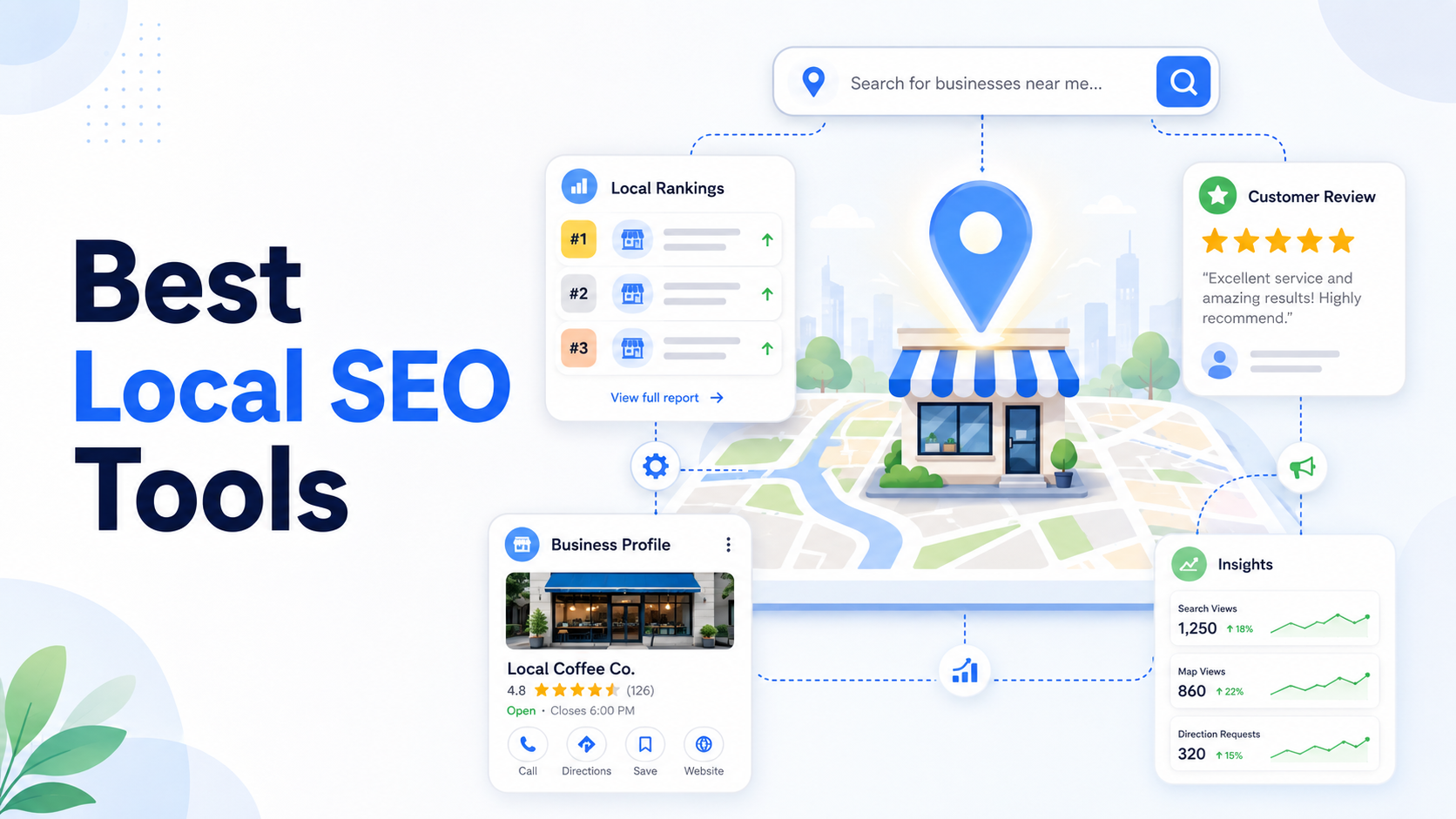
For a local business, your Google Business Profile is often more important than your website, because it is what appears in the map pack and on the right-hand side of branded searches. A complete, accurate, actively managed profile — correct categories, hours, photos, services, and a steady flow of reviews — is the single biggest driver of local visibility.
This is the pillar that quietly governs the others. Your star rating and review volume shape whether anyone clicks your listing in the first place, and reviews are a confirmed local ranking factor. (Our complete guide to review management covers how to build that pillar into an operating routine.) We will come back to why this pillar deserves the most attention.
Social channels matter to the degree your customers use them, and that varies enormously by industry. A restaurant or a med spa lives or dies on Instagram; a plumbing company may get more from a single well-managed Google profile than from any social account. The discipline here is honesty about where your audience actually is, rather than spreading yourself across every platform out of obligation.
Beyond Google, your business appears in dozens of directories — Yelp, Apple Maps, Bing Places, industry-specific sites. Inconsistent information across these (an old address, a disconnected phone number) erodes trust with both customers and search engines. Keeping them consistent is unglamorous but real.
If you manage only one part of your online presence well, make it reviews — and the reasoning is worth spelling out, because it is easy to under-rate.
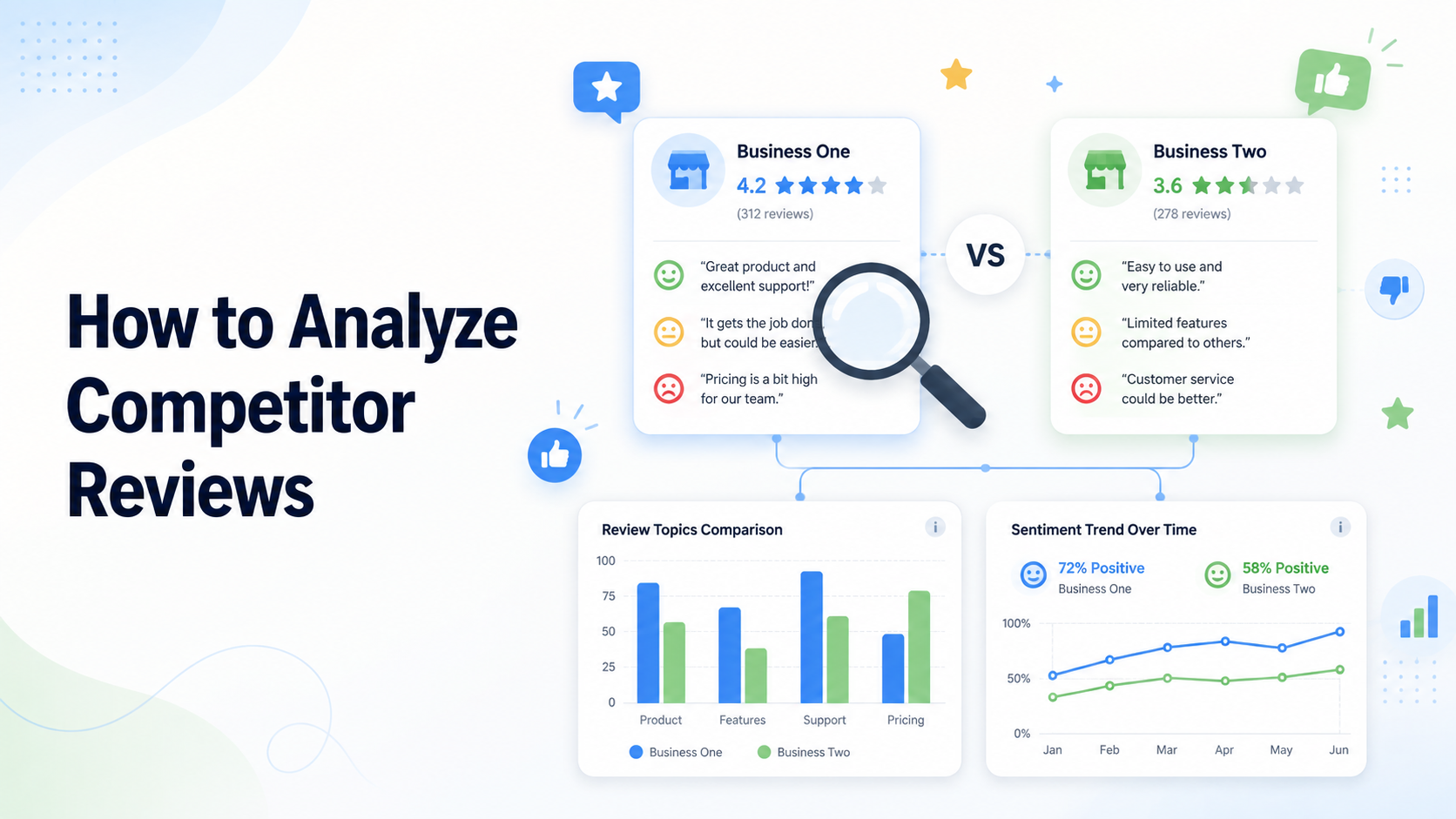
Reviews sit at the exact moment of decision. A prospect has already found you; the only question is whether they choose you over the listing above or below yours. At that moment, a 4.7-star rating with 180 recent reviews beats a 4.9 with 12, and both crush a profile with no recent activity at all. Reviews are also the rare presence factor that compounds: more reviews lift your local ranking, a higher ranking brings more visitors, and more visitors produce more reviews. Few other pillars feed themselves like that.
They also shape perception across every other surface. Strong reviews make your website more persuasive, your ads more efficient, and your social proof self-evident. A polished website attached to a 3.2-star profile with complaints from last year convinces no one. The reverse — a modest website attached to a wall of recent five-star reviews — converts all day. This is why a business with limited time and budget should put reviews first and let the other pillars follow.
You do not need an agency or a full-time marketer to manage this well. You need a repeatable routine and the discipline to keep it. Here is a workflow that covers the essentials without becoming a second job. Managing your presence across platforms is easier when you can pull everything into one view. If you handle reporting for a business or clients, being able to export reviews for reporting — across Google and other sources in a single CSV — turns scattered feedback into a dataset you can actually analyze and share.
For multi-location businesses, online presence management gets meaningfully harder, and the failure modes are specific. Each location needs its own Google Business Profile, its own review pipeline, and its own reporting — never a single shared profile, which sends reviews to the wrong place and weakens every location's local ranking. The discipline is keeping each location's presence individually strong while seeing the whole picture in one place, so a profile that's quietly sliding doesn't go unnoticed for months.
You can manage all of this manually — spreadsheets for directory listings, a calendar reminder to check reviews, a hand-typed text asking each customer for feedback. For a single location with low volume, that can be enough to start. The trouble is that the highest-leverage pillar, reviews, is also the most tedious to run by hand: remembering to ask every customer, timing the request well, routing feedback, and monitoring across platforms is exactly the kind of repetitive work that quietly stops happening on a busy week.
This is where a dedicated platform earns its place. Instead of relying on memory, the review engine runs automatically — requests fire off the right trigger, satisfied customers get a frictionless path to your Google profile, dissatisfied customers reach you privately, and everything is monitored in one dashboard. The other pillars still need attention, but the one that compounds gets handled consistently rather than whenever you remember.
One note on doing it the durable way: ask every eligible customer for feedback and make public reviewing easy for everyone, rather than screening out customers you expect to be unhappy or gating the review ask on a high score. Filtering like that runs against Google's review policies. Routing honest feedback to the right channel — public for the satisfied, private for the dissatisfied — stays on the right side of the line and builds a more credible profile besides.
Ready to take control of the highest-leverage part of your online presence? Start your free 14-day trial of TrueReview — automated SMS and email review requests for the customers whose contact info you capture, smart routing that sends satisfied customers to Google and unhappy ones to a private channel, review monitoring across platforms, location-specific pipelines for multi-location operations, and Review Radar™, which flags reviews that appear to violate Google policy so you stay in control of how you respond. A credit card is required to start your trial; no setup fees, no contracts.