BLOG POST
When someone Googles "auto insurance near me" or "homeowners insurance [your city]," the agency that shows up in the first three results captures the lion's share of the clicks. The agencies in positions 4–10 split the remainder. Page two might as well not exist.
That ranking gap isn't accidental. It's the cumulative result of how well an agency has done dozens of small things — from how its website is structured, to whether its Google Business Profile is complete, to how recently customers have left it reviews. SEO is the discipline of getting those small things right consistently enough to win the search-result real estate that drives most of the inbound leads in the modern insurance business.
This guide is the complete 2026 playbook. It covers everything an insurance agency needs to rank — local SEO, Google Business Profile, on-page optimization, technical SEO, keyword research, content strategy, link building, and review-driven local signals. It's written for agencies first, but every tactic applies equally to independent agents, captive agents, and brokers running their own books. If you sell auto, home, life, commercial, or specialty insurance and you want a steadier flow of inbound leads from search, this is the playbook. Serving trade clients? It helps to understand what it takes to start an hvac business.
For a quick starting reference on where reviews fit specifically, see our reviews and reputation guide for insurance agencies. For the broader local-business SEO foundation, see our pillar guide on Google reviews for business.
A few realities about insurance shopping in 2026 that explain why SEO is the highest-leverage marketing channel an agency has.
Search is where insurance shopping happens. 66% of consumers use search engines to research products and services before buying — and for high-stakes, comparison-heavy purchases like insurance, that number is even higher. The customer who is about to switch their auto policy starts by typing a query, not by walking into your office.
The competition is enormous. Type "insurance" into Google and you'll see over 1.5 billion results. That's the haystack your agency is trying to be the needle in. Without a deliberate SEO strategy, you're indistinguishable from every other agent within 50 miles.
Lead intent from search is high and durable. Unlike paid social ads, SEO leads come to you — they're actively looking for what you sell at the moment they find you. Conversion rates on organic search traffic for insurance typically outperform paid traffic by 2–3x.
SEO is one of the few compounding marketing channels. Paid ads stop the moment you stop spending. Organic rankings, once built, keep generating leads for months and years. An agency that invests $30K in SEO over a year often sees that work continue generating leads three years later.
A few stats that frame the opportunity:
The takeaway: the agencies that show up first in local search results don't get slightly more leads than the ones below them. They get a multiple of the leads. SEO is the lever that determines which side of that gap you end up on.
There's no single trick that makes an agency rank. SEO works because all of these pillars are working together. Most agencies do 2 or 3 of them well and skip the rest — which is why most agencies don't rank.
The six pillars:
We'll go through each one with specific tactics for insurance. Throughout, where reviews intersect with SEO (and they intersect with all six pillars), we'll flag it — because review-driven local SEO is the single most cost-effective SEO investment most insurance agencies can make in 2026.
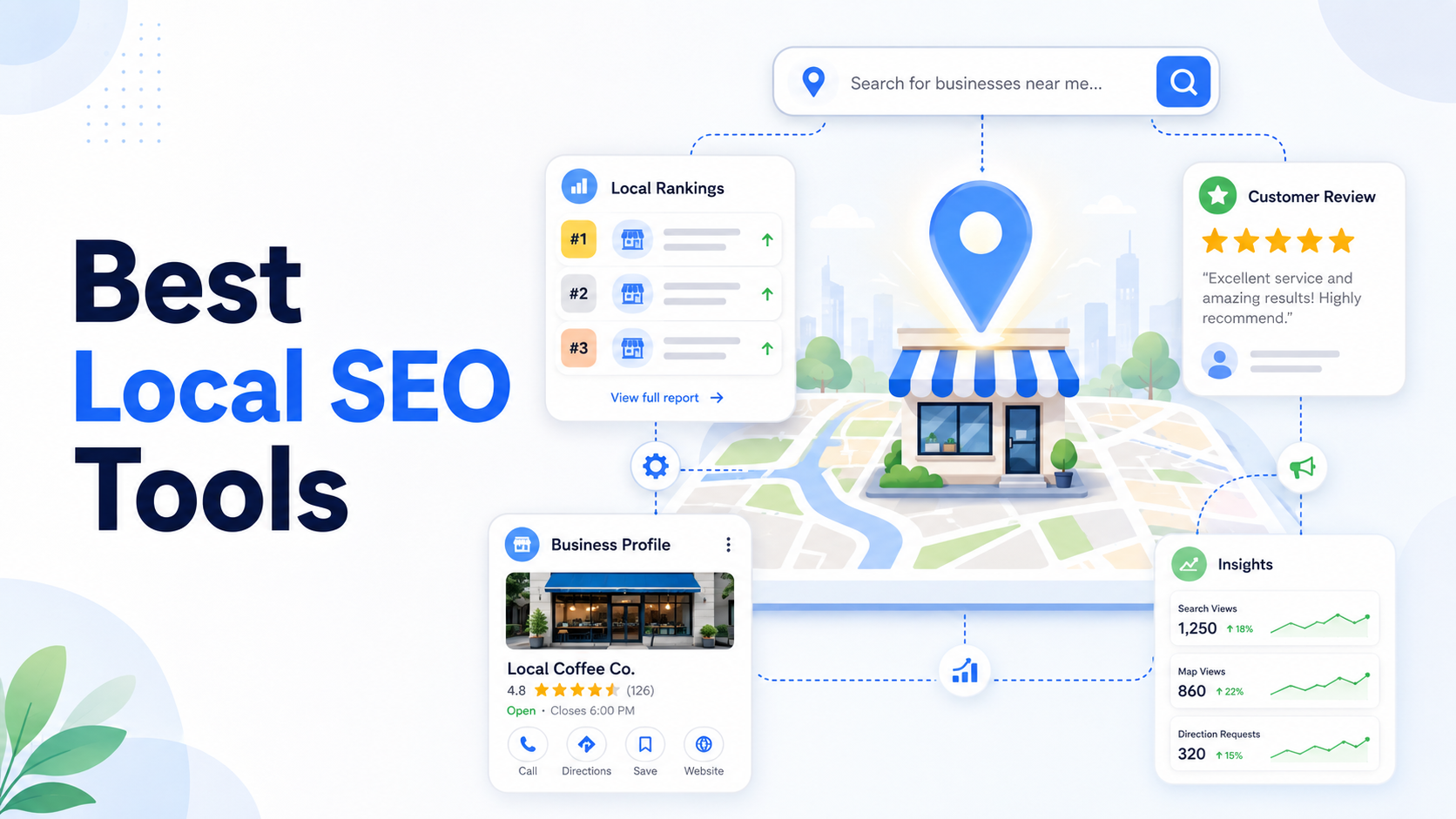
For most insurance agencies, local SEO is the single most important pillar. The reason: nearly every insurance search has local intent built into it. "Auto insurance near me," "homeowners insurance Dallas," "best life insurance agency Chicago" — these are local queries that activate Google's Local Pack (the 3-result map view that dominates the top of the search results).
Winning the Local Pack starts with one tool: your Google Business Profile.
If you haven't claimed your Google Business Profile, do this before anything else in this guide. It's free, takes 15 minutes, and is the single highest-impact thing most agencies can do for their local SEO.
The steps:
Once your profile is set up, ranking in the Local Pack comes down to three signals Google weighs heavily:
Relevance — how well your profile matches the search query. This is influenced by your business name (don't keyword-stuff it — that's against Google's policy), your categories, your description, and the content of your reviews. If your reviews repeatedly mention "auto insurance" and "great rates," Google starts associating your business with those phrases.
Distance — how close you are to the searcher. You can't control this directly, but you can extend your reach by creating location-specific pages on your website for the cities, counties, and neighborhoods you serve. More on that in the content section.
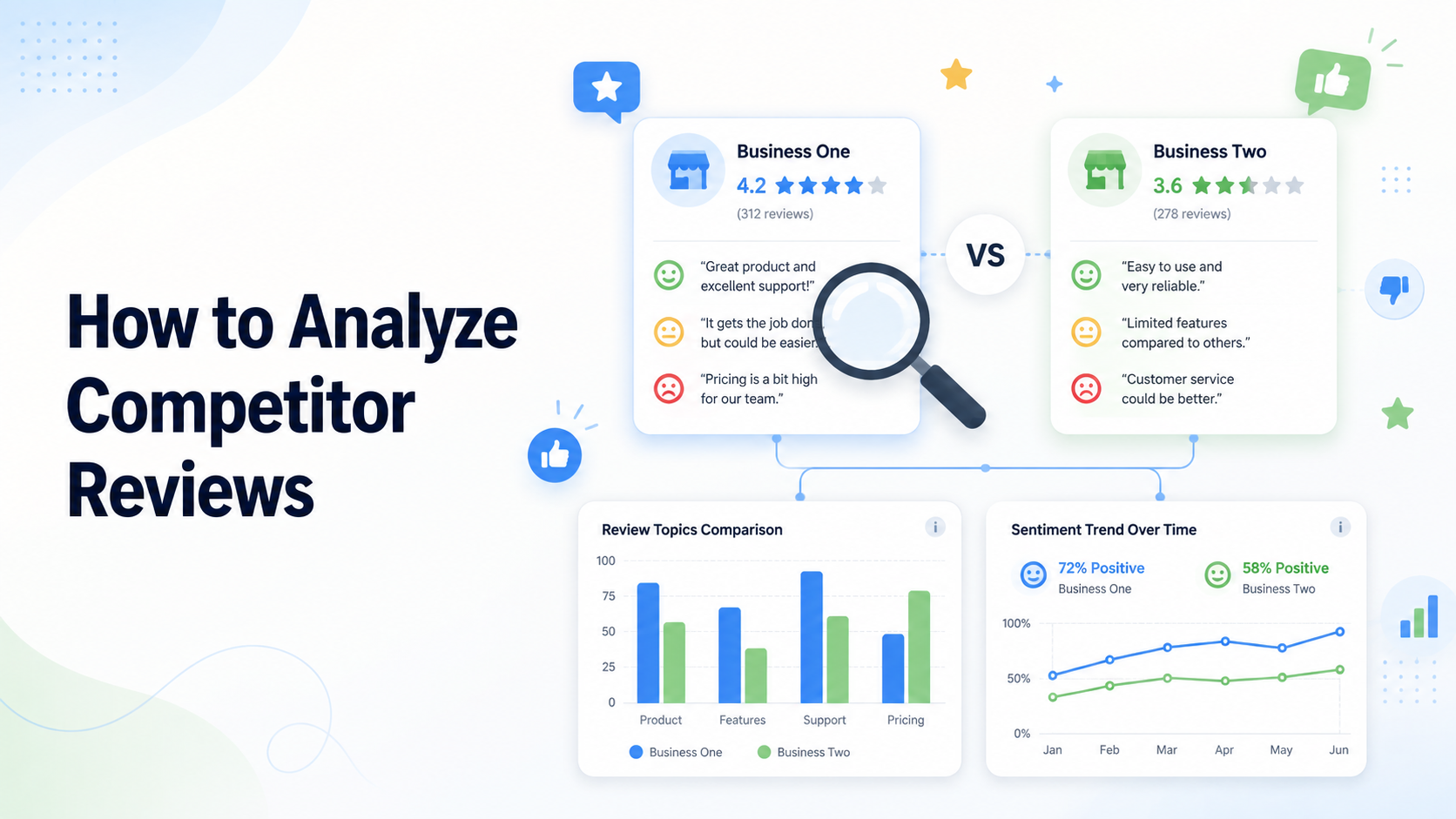
Prominence — how well-known and trusted your business is online. This is where reviews carry enormous weight. Quantity, recency, average rating, and response rate all factor in. A profile with 100 fresh reviews at 4.7 stars dramatically outperforms one with 12 reviews at 5.0 stars — even though the 5.0 looks better at a glance.
Reviews are the single most actionable SEO lever for insurance agencies in 2026. They influence rankings, click-through rates, and conversions simultaneously.
The mechanics:
The single biggest miss most agencies make: they have a decent Google profile but only 8–15 reviews, because they never built a system for asking. A platform like TrueReview automates review requests by SMS and email — typically triggered the day after a new policy is bound or renewed — and consistently moves agencies from 10–15 reviews to 100+ in their first year.
On-page SEO is everything on your website pages that Google reads to understand what they're about. Most insurance agency websites are weak here — generic templated pages, no keyword targeting, duplicate content across location pages. Fix these basics and you've cleared a bar most of your competition hasn't.
The title tag is the clickable headline that appears in Google search results. It's the single most important on-page SEO element on each page.
Rules:
Examples:
The meta description is the short paragraph under the title tag in search results. It doesn't directly impact rankings, but it heavily influences whether someone clicks.
Rules:
Clean URLs help both SEO and user experience.
Rules:
Examples:
yoursite.com/auto-insurance-dallasyoursite.com/blog/how-much-life-insurance-do-i-needyoursite.com/page?id=4837yoursite.com/services/auto/dallas-tx/insurance.htmlHeader tags structure your content for both readers and search engines.
Rules:
Linking from one page on your site to another helps Google understand the structure and importance of your pages.
Tactics:
Keyword research is figuring out what your prospects actually type into Google when they're looking for insurance. Most agencies skip this entirely and write pages about whatever topics feel intuitive — which means they create content nobody is searching for.
A few free or affordable options:
Three categories of keywords matter most for insurance agencies:
1. Service keywords with local intentThe bread and butter. Examples: "auto insurance Dallas," "home insurance Tampa," "life insurance agency Chicago," "commercial insurance Phoenix." High intent, high conversion.
2. Long-tail informational keywordsLower volume but easier to rank for, and great for content marketing. Examples: "how much homeowners insurance do I need," "do I need umbrella insurance if I rent," "what does business insurance cover for contractors." These attract prospects who are still researching.
3. Comparison and brand keywordsExamples: "Geico vs State Farm," "best auto insurance for teenagers," "cheapest homeowners insurance Texas." High-intent, but competitive.
The most common SEO mistake is trying to rank one page for too many keywords. The fix: one primary keyword per page, with related secondary keywords supporting it.
Example map for a Dallas-based agency:
Each page targets its own keyword, doesn't compete with the others, and has its own structured content.
Content marketing is how you rank for the long-tail informational keywords above — and how you build authority that helps your service pages rank too. Most insurance agency websites have either no blog or a blog that hasn't been updated in 18 months.
1. Service pages — one for each line of insurance you sell, in each major location you serve. These are your money pages. They should explain what the policy covers, who needs it, common scenarios, and have a clear quote-request call-to-action.
2. Location pages — if you serve multiple cities, counties, or neighborhoods, create a dedicated page for each. Don't copy-paste content with the city name changed — Google detects this and penalizes it. Each location page should have unique, specific content about that area.
3. Educational long-form blog posts — answer the questions your prospects are asking before they're ready to buy. Examples: "How much life insurance do I need at 35?", "What's the difference between HO-3 and HO-5 homeowners insurance?", "Do I need rideshare insurance for Uber driving in Texas?"
4. Comparison content — "term vs. whole life," "renters vs. homeowners," "comprehensive vs. collision coverage." High search volume, high conversion intent, and a natural place to recommend speaking with an agent.
5. Local resource content — "Best auto repair shops in Dallas after an accident," "Hurricane prep checklist for Tampa homeowners." These earn local backlinks and signal your agency's local expertise to Google.
A realistic rhythm for most agencies: 2 long-form blog posts per month, plus quarterly updates to existing pages. That's enough to keep Google seeing fresh content without overwhelming your team.
Long-form means 1,200–2,500 words. Google strongly favors comprehensive content that fully answers the searcher's question over short thin posts. A 1,800-word blog post that answers a question well will outrank ten 400-word posts on the same topic.
For content you don't have time to write yourself, hire a specialized insurance content writer rather than a generalist — accuracy matters in this industry, and bad content can actually hurt your authority signals.
Technical SEO is the under-the-hood stuff that affects whether Google can crawl, render, and index your site properly. Most agency websites have technical issues that quietly cap their rankings.
More than half of insurance-related searches happen on mobile. Google indexes the mobile version of your site first, so if your mobile experience is broken, your rankings suffer everywhere.
Checklist:
Test your site at Google's Mobile-Friendly Test.
Speed is a direct ranking factor and a major conversion factor. More than half of mobile users abandon a page that takes longer than 3 seconds to load, and improving site speed has been shown to lift conversion rates by up to 20%.
Common issues:
Test your speed at PageSpeed Insights.
Structured data (also called schema markup) is code that tells Google explicitly what your business is, what services you offer, your address, your reviews, and more.
For an insurance agency, the most important schema types are:
If you're on WordPress, plugins like Yoast SEO or RankMath generate this automatically. On Webflow, Squarespace, or custom sites, your developer can add it directly.
A few things to verify:
Off-page SEO — the signals Google gets from other websites about yours — is the hardest pillar to execute but one of the most important for competitive keywords.
A link from another reputable website to yours is one of the strongest trust signals in Google's algorithm. For insurance agencies, the best link sources are:
1. Local business directoriesList your agency on Google Business Profile, Bing Places, Apple Maps, Yelp, Yellow Pages, BBB, your local Chamber of Commerce, and industry directories like Insurance.com and TrustedChoice.com. Use data aggregators like Foursquare, Data Axle, and Infogroup to distribute your listing across hundreds of secondary directories efficiently.
2. Niche insurance directoriesTrustedChoice.com, IA Magazine, Big "I" (Independent Insurance Agents of America) member directory — these carry weight in your specific industry.
3. Local journalism and blogsPitch to your local newspaper, regional business journals, and city-focused blogs. A guest article or expert quote in a local publication often comes with a backlink and lifts your local authority signals.
4. Industry partnershipsReal estate agents, mortgage brokers, financial advisors, auto dealers — businesses that work with the same customers you do. Cross-link with partners on a "Resources" or "Partners" page.
5. Educational and association linksYour appointed carrier may list partner agencies. Local schools, nonprofits you sponsor, and community organizations often list business sponsors with links.
The key rule: focus on relevance and trust, not volume. Ten high-quality links from local and insurance-relevant sites beat 200 low-quality directory links every time. Black-hat tactics — link farms, paid link networks, comment spam — will get you penalized.
Reviews function as off-page SEO signals even though they live on Google's own platform:
63% of Google users check consumer reviews when shopping online, and 51% of customers will leave a review if asked. The math is straightforward: ask consistently, and your review base compounds. Ignore reviews, and your competitor with a review automation system pulls away in rankings every month.
For automated review request workflows specifically built for insurance agencies — including bound-policy triggers, renewal triggers, and CRM integrations with AgencyZoom, Applied Epic, EZLynx, and HawkSoft — see TrueReview for insurance.
You cannot improve what you don't measure. Most insurance agencies investing in SEO don't track results well, which means they can't tell what's working.
1. Organic search traffic (Google Analytics)The number of visitors arriving from search engines. Should be trending up over time. If it's flat for 3+ months, something is wrong.
2. Keyword rankings (Google Search Console + a rank tracker like Ahrefs or SEMrush)Track your target keywords weekly. Watch which ones are moving up and which are stagnant.
3. Local Pack visibilityHow often you appear in the 3-result map view for your target queries. Tools like BrightLocal track this.
4. Conversions from organic search (Google Analytics goal tracking)The metric that actually matters. Quote requests, contact form submissions, phone calls from organic visitors. Track these separately from paid traffic.
5. Review count and average rating (Google Business Profile insights, plus a review management dashboard)Growing review count and stable/growing average rating both correlate strongly with search rankings.
6. Page speed and Core Web Vitals (PageSpeed Insights, Google Search Console)A direct ranking factor. Should be in the "Good" range across both mobile and desktop.
If you're starting from scratch or your current SEO is incoherent, here's the sequence:
Month 1: Foundation
Month 2: On-Page & Content
Month 3: Authority & Measurement
Most agencies see meaningful ranking movement starting in month 4–6, with substantial lead flow increases in month 6–12. SEO is a slow-build channel — but unlike paid ads, the results compound and persist.
Five things to take from this:
The agencies that win the search-rankings game in 2026 aren't the ones spending the most on SEO consultants. They're the ones doing the boring fundamentals consistently — claiming and optimizing their Google profile, building reviews every month, publishing content that answers real customer questions, fixing the technical issues on their site, and tracking what's working.
Ready to put the review side of this system on autopilot? Start a free 14-day trial of TrueReview — automated SMS and email review requests, CRM integrations with the major insurance management platforms, AI-powered response generation, and live review widgets you can embed on your agency website.