BLOG POST
The reviews landscape has changed substantially in the last 18 months. Google's algorithms are dramatically better at detecting fake reviews, AI-generated content, and review manipulation schemes. Customers reading reviews are more skeptical and more discerning than they used to be. Tactics that worked five years ago — and are still being recommended in older blog posts — now actively backfire.
What still works in 2026 is the same thing that has always worked, with a few important updates: deliver an experience worth 5 stars, ask the right customers at the right moment in the right way, respond visibly to everything that comes in, and let the review profile build steadily over time. The businesses that get this right consistently produce 5-star reviews and dominate local search rankings in their markets. The businesses that try shortcuts — fake reviews, AI-generated testimonials, review manipulation schemes — increasingly find themselves with suspended Google Business Profiles and badly hurt reputations.
This guide is the practical strategy playbook for consistently generating 5-star Google reviews in the current environment. Each of the strategies below addresses a specific lever that drives rating quality. Combined, they produce review profiles that rank well, convert prospects, and stand up to the scrutiny that customers and platforms now apply to online reviews.
This is the strategy that almost every "5-star review" article skips, and it's the most important one. The most reliable way to get more 5-star reviews is to consistently deliver experiences that genuinely earn 5 stars. No tactical tweak can manufacture genuine satisfaction. No clever message can convince a frustrated customer they had a great experience. The infrastructure of review collection only works on top of a customer experience that actually deserves the rating you're asking for.
In practical terms, this means the operational question — "are we genuinely delivering experiences worth 5 stars?" — is the first review-improvement intervention, not the last.
A few diagnostic questions worth asking honestly:
Businesses with strong operational foundations have an unfair advantage in review collection. Their average review is naturally higher because their average customer experience is naturally better. The tactics in the rest of this guide multiply on top of that foundation. Without the foundation, the tactics are noise.
The single biggest variable in review rating (not just review volume) is when you ask. The same satisfied customer who would write you a glowing 5-star review at one moment will write you a generic 4-star review at another, depending purely on timing.
Peak emotional satisfaction varies by industry but always has a clear pattern: it's the moment when the experience feels its best, before any normalizing or fading sets in. For an auto repair customer, it's right after they drove home in a fixed car. For a real estate buyer, it's the day after closing. For a restaurant patron, it's that night or the next morning. For a contractor's client, it's the day after the project wrapped and they've walked through the finished space in good light.
Ask too early — before the experience has fully landed — and reviews tend to be generic. Ask too late — after the emotional peak has faded — and reviews tend to be lukewarm. Ask in the peak window and the same customer writes a meaningfully better review.
Specific timing patterns that consistently produce 5-star reviews:
The right timing isn't "as soon as possible" — it's "at the moment the customer's emotional satisfaction is highest." Those are often different.
SMS continues to dominate review request conversion in 2026. Open rates remain near 98%, response rates run 3-5x email for review requests, and the tactic has held up against the spam concerns that plagued some communication channels in recent years.
The reason is structural: SMS arrives in the same channel as messages from family and friends. A customer who would never read a marketing email will tap on a text from a business they just visited. The brevity of SMS also forces the request into a more authentic-feeling format than email allows.
A few SMS-specific principles for 2026:
Email still has its place — for higher-touch professional services, online businesses without phone numbers, and customers who prefer email — but SMS is the high-conversion channel for most local businesses with permission to text their customers.
The single most common reason review requests fail is that the message doesn't actually ask for a review. Phrases like "we'd love your feedback" or "let us know how we did" don't produce reviews — they produce confusion. The customer reads the message, vaguely thinks "that's nice," and moves on without taking action.
The phrasing that actually works asks directly: "Would you mind leaving us a Google review?" or "If you have a minute, a Google review would mean a lot." The directness isn't pushy — it's clear. Customers respond to clear requests dramatically better than vague invitations.
A few phrasing patterns that consistently produce results:
Phrases to avoid:
Clarity isn't pushy. Pushy is asking three times in a week or pressuring customers in person to leave a review immediately. Clarity is one specific, polite request that the customer can choose to act on or not.
Roughly half of all reviews come from the second message, not the first. A customer who didn't respond to the initial request often will respond to a polite reminder 3-5 days later — usually because they meant to leave the review but got busy and forgot.
The reminder should be:
This 1-reminder cap matters more in 2026 than it did historically because customers are more sensitive to perceived spam than they used to be, and businesses that pester customers can actually generate worse reviews from previously-satisfied customers who now feel hounded.
Every step between your customer and the published review is friction. The biggest friction reduction is providing a direct, one-tap link that opens the Google review form for your business — not asking the customer to "search for us on Google and leave a review."
A direct link looks like one of:
https://search.google.com/local/writereview?placeid=YOUR_PLACE_IDThe conversion difference between direct links and search-and-find requests is dramatic. A search-based request loses 60-70% of customers at the first step — they search, find a result that looks like yours, get distracted by the listing, and never make it to the review form. A direct link gets one tap and the form opens.
Test your link from multiple devices before deploying it widely. Some older URL formats had quirks on certain mobile devices that broke the conversion path. The current formats are reliable, but verify before deploying at scale.
Personalization matters but only at the right level. Using the customer's first name is essential. Using your business name is essential. Beyond that, the diminishing returns are real, and the risks of overpersonalization are growing in 2026 as customers become more sensitive to how their data is being used.
What works (the right level of personalization):
What backfires (overpersonalization):
For HIPAA-covered businesses, this level matters even more — referencing specific clinical detail in messages is PHI exposure. For non-healthcare businesses, the issue is brand voice: overpersonalized messages feel like corporate surveillance, even when technically appropriate.
The principle: personalize at the level a thoughtful friend would. Your friend addresses you by first name and references the general context but doesn't recite your medical history at you. Apply the same standard to review request messages.
In 2026, response activity is an explicit factor in Google's local search ranking algorithm. Businesses that respond to reviews promptly and consistently rank higher than businesses with similar review profiles that don't respond.
Beyond the algorithmic factor, response activity matters to the prospects reading your reviews. Customers scanning a profile see your responses alongside the original reviews. A business that responds visibly demonstrates engagement, accountability, and care. A business that lets reviews accumulate without response — particularly negative reviews — signals avoidance.
Practical guidelines:
Skipping responses is one of the most common review-program failures in 2026. Even mid-sized local businesses that have automated review collection often haven't built the response habit, and their profiles look thinner than they actually are.
This is the strategy that's most distinctly 2026-relevant. Google's algorithm has gotten substantially better at distinguishing organic review velocity from manipulated review bursts. Steady, consistent review accumulation now ranks higher than the same total review count accumulated in concentrated bursts.
What does Google's algorithm look like for in 2026:
What flags as suspicious:
The practical implication: focus on consistent, modest weekly volume rather than trying to game the system with bursts. A business consistently capturing 4-6 reviews per week ends up with a healthier algorithmic profile than a business that gets 25 reviews in a week and then 0 for two months.
This is also why "ask everyone at once" campaigns backfire in 2026. They produce burst patterns that look manipulated to Google's algorithms, even when every review is from a real, satisfied customer.
A profile with only 5-star reviews looks suspicious in 2026. Customers know that no business is universally beloved, and a perfect 5.0 rating with hundreds of reviews increasingly reads as either review manipulation or a too-small sample size. A 4.7 average with a meaningful number of 4-star reviews and a few 3-star reviews handled professionally reads as more credible than a 4.95 rating that looks manufactured.
Customers also pay close attention to how negative reviews are handled. A business with a 2-star review that's been responded to with a thoughtful, professional reply often reads better than a business that has the same 2-star review unresponded. The way you handle the negative review tells prospects more than the negative review itself.
Practical implications:
This is one of the most counterintuitive strategies in modern review management — treating negative reviews as unavoidable parts of the profile to be managed well rather than as enemies to be eliminated. But the data is clear: prospects read profiles holistically, and a profile that includes professionally-handled negative feedback converts better than a profile that looks artificially perfect.
A few specific shifts that affect strategy in the current environment:
AI-generated review detection has matured significantly. Both Google's Maps team and consumer-side detection tools have gotten dramatically better at identifying AI-generated reviews and AI-coached responses. Reviews that read as templated, lack specific details, or use generic positive language patterns increasingly get flagged. This affects both fraudulent reviews and legitimate-but-coached reviews.
Review fraud enforcement has tightened. Google's profile-suspension actions for review manipulation are more aggressive than they were even 24 months ago. Practices that were tolerated five years ago — buying reviews, asking employees to review, incentivizing reviews — now generate enforcement actions with regularity.
Customer skepticism has increased. Surveys consistently show that customers in 2026 read reviews more critically than they did historically. They check review dates, look at reviewer profiles, scan for specifics, notice response patterns, and weight recent reviews more heavily than old ones.
Photo and visual content carry more weight. Reviews with photos rank higher in Google's display and convert prospects better than text-only reviews. The 2026 reality is that any business that can encourage photo-bearing reviews has an advantage over businesses that don't.
Response activity is more clearly weighted. Google has confirmed more explicitly in recent guidance that response activity affects local rankings. The businesses that respond to every review consistently outperform businesses with similar review counts that don't respond.
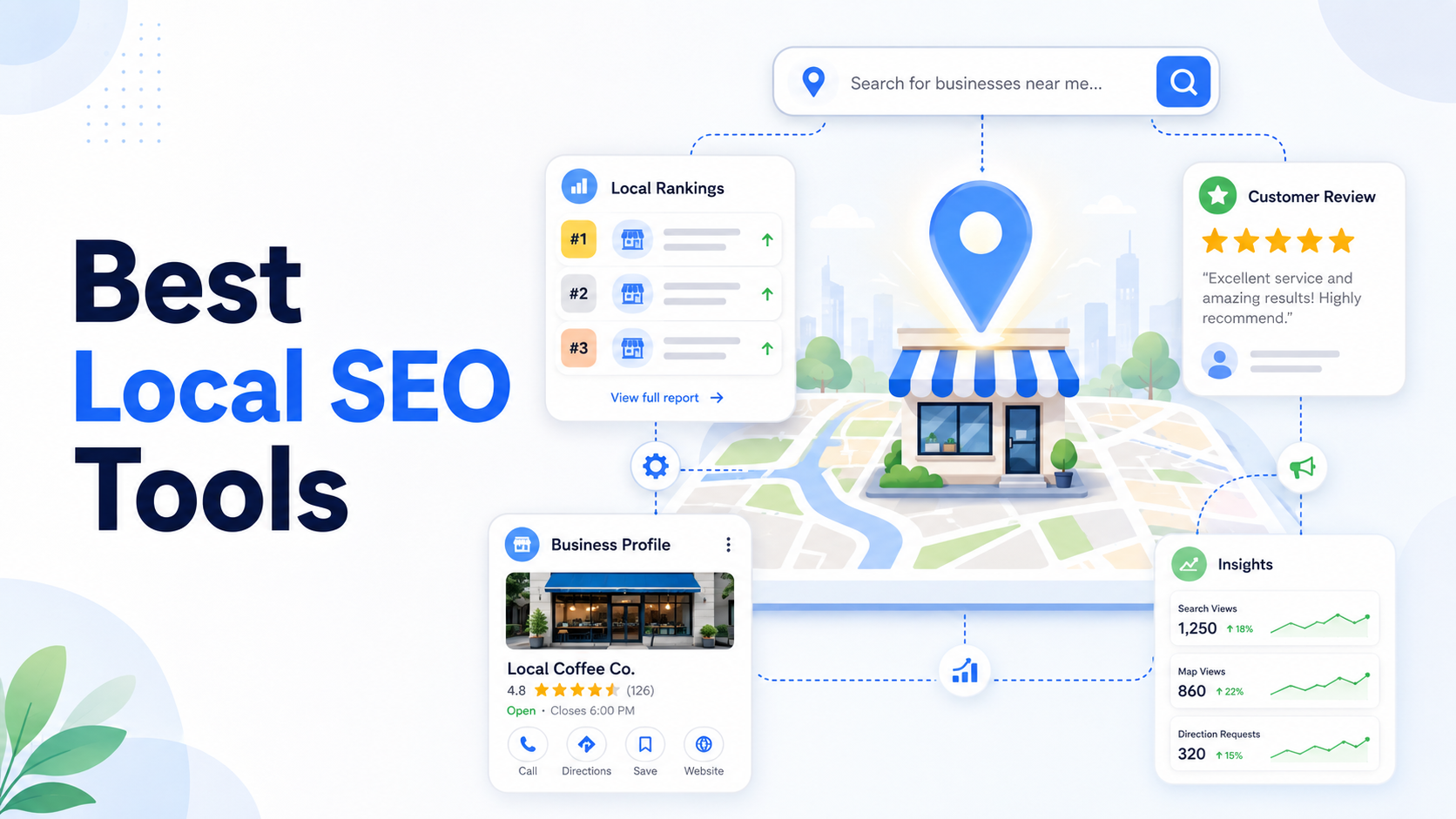
The local 3-pack matters more than ever. Google has continued to expand the visual real estate the local 3-pack occupies in search results. Ranking in the 3-pack for relevant searches drives an increasing share of inbound traffic for local businesses. Reviews remain one of the strongest signals for 3-pack ranking.
A local business consistently producing 5-star Google reviews in 2026 has all of these in place:
Businesses with all ten of these in place tend to produce 4.7-4.9 average ratings with hundreds of reviews accumulated steadily over time — exactly the profile that ranks well in Google's local 3-pack and converts prospects effectively. Businesses that try shortcuts in 2026 increasingly find themselves with weaker profiles, suspended profiles, or reputations badly damaged by review manipulation that got caught.
The strategies above aren't tricks. They're the systematic application of customer-centric operational discipline to review collection. The businesses that figure this out aren't gaming the system — they're aligning their review practices with what genuinely produces strong reputations in the current environment. For more tactics, see ask customers for feedback.
Ready to systematize your 5-star review collection? Start your free 14-day trial of TrueReview — automated SMS and email workflows tuned to the timing of your industry, integrations with most CRM and POS systems, embeddable review widgets that surface response activity for SEO benefit, and dashboards that track review velocity (not just count) so you stay on the right side of Google's algorithmic preferences. No setup fees, no contracts.