Restaurants live and die by reviews. More than any other local business, a restaurant's online star ratings determine whether someone walks through the door, books a table, or scrolls past to the next place on Google Maps.
The numbers tell a stark story: 22% of diners won't visit a restaurant after reading a single negative review. After three, that number jumps to 59%. On the other side, diners are 3.9 times more likely to choose a restaurant with the highest positive review displayed on Google for their preferred cuisine. The gap between the top-rated spot and everyone else compounds every month.
Win Google first, ask every customer, respond within 48 hours.
Google reviews drive almost every dining decision — build that base before chasing Yelp or TripAdvisor. Train staff to ask, put QR codes everywhere, and follow up by SMS the next day. Respond to every review in under 48 hours: positive reviews build loyalty, and 33% of negative reviews get revised after a thoughtful response.
This guide is the complete restaurant playbook for 2026 — what platforms matter, how to get more reviews on each, how to respond when reviews come in (good and bad), and how to turn the reviews you already have into more foot traffic. For the broader cross-industry view, see our pillar guide on Google reviews for business. For restaurant-specific tactics, keep reading.
Why Restaurant Reviews Matter More Than Almost Any Other Vertical
Restaurants face a uniquely intense version of the reviews problem. Three things make it different.
Reason 01
The decision happens in minutes
A diner deciding where to eat in the next hour pulls out their phone, opens Google Maps, and scans star ratings. No consideration period, no second visit. The review you have right now wins or loses the booking.
Reason 02
The volume of decisions is enormous
Most restaurants compete against 20-50 nearby alternatives on any given search. Even small differences compound: 4.6 vs. 4.3 over a year of dining decisions is a packed dining room vs. a slow one.
Reason 03
Reviews are 20% of the algorithm
Review signals — quantity, recency, rating, keyword diversity — account for roughly 20% of Google's Local Pack ranking. Top-3 businesses average 47 reviews; positions 7-10 average just 38.
A few other 2026 stats worth knowing as a restaurant operator:
97%
of consumers read online reviews before choosing a local business
41%
of consumers "always" read reviews when browsing — up from 29% a year ago
31%
will only consider a business with 4.5 stars or higher — nearly double last year
34%
of diners choose a restaurant based on info found through Google reviews specifically
92%
use social media reviews to inform their dining purchase decisions
The bar moves every year, and it moves toward higher star ratings and fresher reviews. The restaurants that consistently collect honest feedback win the compounding game.
Which Platforms Actually Matter for Restaurants
Most restaurants don't need to chase every review platform. They need to win on the few that drive real foot traffic. Here's how the major platforms stack up in 2026.
Win first
PLATFORM 01
Google (Google Business Profile)
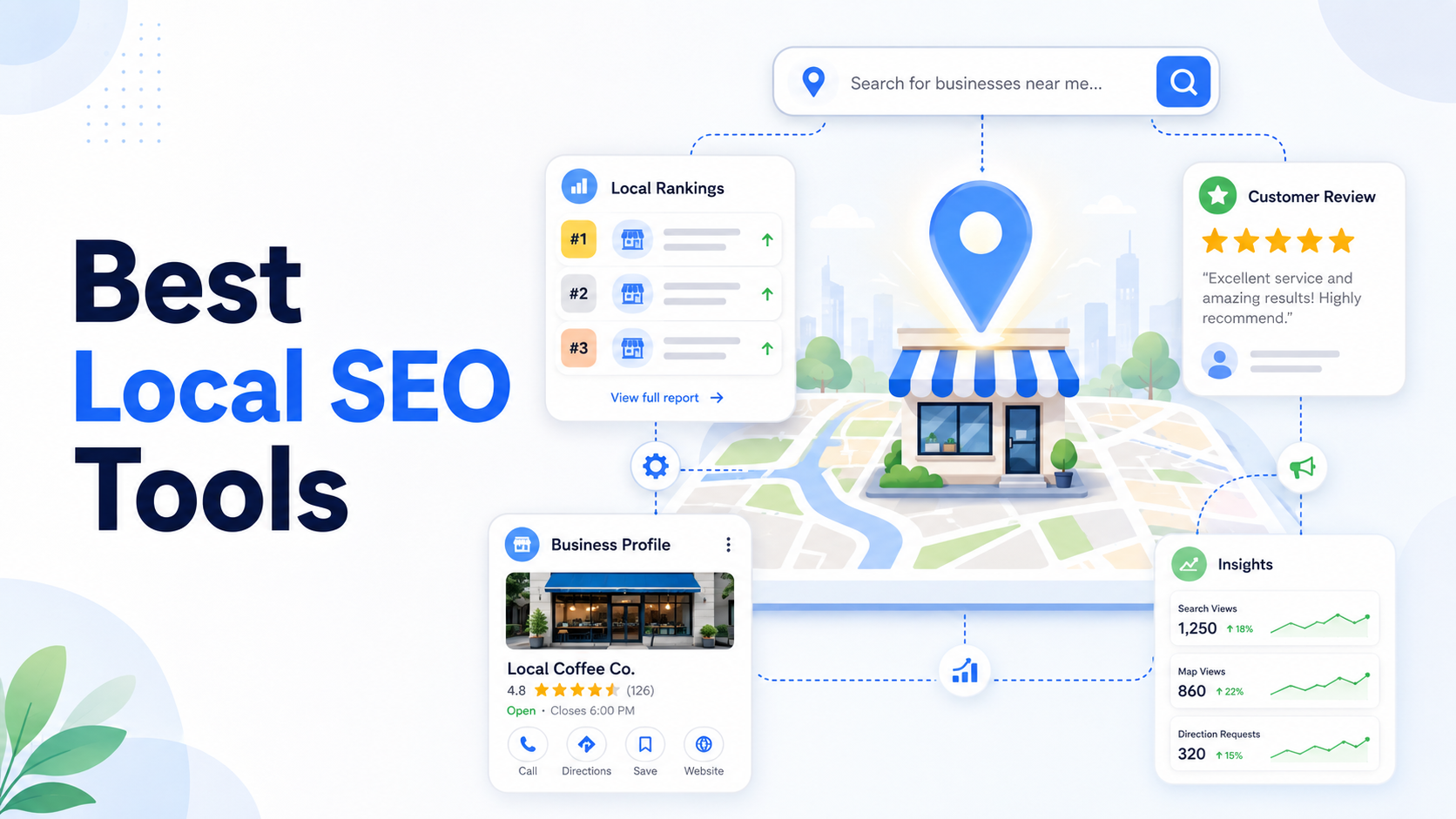
The most important platform by a wide margin. Google reviews show up directly in Search, Maps, and the Local Pack — where most dining decisions actually get made. If you do nothing else, build your Google review base.
What works specifically:
• Photos drive clicks. Restaurants with photos on their Google Business Profile get 42% more direction requests and 35% more website clicks than those without
• Menu visibility matters. 93% of consumers look up menus before dining — keep yours updated on your profile
• Use Google Posts for specials, events, and seasonal hours. Signals an active listing
• Take advantage of attributes — women-owned, family-friendly, outdoor seating, accepts reservations. These show up as filter chips
• Add your online ordering link. 60% of consumers order delivery or takeout weekly — send them straight to ordering, not your homepage
Layer in
PLATFORM 02
Yelp
Still important — especially in larger metros and tourist-heavy areas. Yelp's traffic skews toward people actively researching where to eat, often deciding for the same day or weekend.
What works specifically:
• Claim your business through the Yelp for Business app — unlocks 20+ free tools
• Add photos within day one of claiming. Restaurants that add 3+ photos within a day get 2.2x more page views
• Detailed profile = 7.6x more page views. Yelp directly rewards businesses that fill in every field
• Respond fast. Messaging a reviewer within 24 hours makes them 33% more likely to revise upward — speed matters here more than most platforms
If tourists
PLATFORM 03
TripAdvisor
Critical if you serve tourists, travelers, or destination diners. Less important for everyday neighborhood spots whose customer base is mostly local repeat visitors.
What works specifically:
• Use TripAdvisor Review Express — free tool that sends customized review requests after a visit
• Photos and listing detail matter even more than on Google or Yelp. Travelers are comparing your restaurant to options in a city they don't live in
• Travelers expect responses. Around one in three will skip a restaurant with no reviews at all, and an unresponsive owner is a red flag in this audience
Where to Focus
For most restaurants, the playbook is:
- Win Google first. Until you have 100+ Google reviews at 4.5+ stars, this is where every minute of effort should go.
- Layer in Yelp if you're in a metro where Yelp drives meaningful local traffic (major cities, college towns, tourist destinations).
- Add TripAdvisor if tourists are a significant share of your customer base.
- Skip the rest for now. Foursquare, Zomato, OpenTable, and the food blog ecosystem matter for specific use cases but aren't where most diners are deciding from.
Multi-platform review management gets messy fast. The right move is to centralize all of it in one dashboard — see our review monitoring overview for the platforms TrueReview supports.
How to Get More Restaurant Reviews
The single biggest lever any restaurant has is also the simplest: ask every customer. Most restaurants ask 5-10% of their diners and wonder why their review count grows slowly. The restaurants that win make the ask part of the workflow.
Here's the system that consistently works.
1
Train every staff member to ask
Servers, hosts, and managers are your highest-converting review channel — they're already in conversation at the natural moment. Train them on the right moment (after they say "we had a great time"), the right tone (natural, never pushy), and the right tool (a QR code on the check or a text from the host's tablet).
2
Put QR codes where diners already are
The highest-converting in-restaurant tool. Place them on every check, on table tents, near the host stand, on takeout packaging, and in the bathroom (yes, really — many restaurants report bathroom QR codes outperforming check codes). Each QR code drops the customer one tap from your Google review form.
3
Send a follow-up text or email the next day
Most restaurants only ask in person, only once, only the customers who happened to be in conversation with the right staff member. Everyone else slips through. An automated SMS or email the next day — tied into your reservation or POS system — changes the math entirely.
4
Time it right
Dine-in: ask at the check, follow up same-day or next-morning. Takeout/delivery: wait 1-3 hours after delivery or until next morning. Catering/large events: 24-48 hours after the event. Avoid Sunday nights and Monday mornings — they get buried. Tuesday-Thursday mornings see the best response rates.
5
Stay on the right side of policy
Don't offer free desserts or discounts in exchange for reviews (violates Google, Yelp, TripAdvisor, and FTC rules). Don't write reviews for customers, even with their phone. Don't filter for happy-looking customers ("review gating" is against Google's policy — use a
feedback gate instead, where unhappy customers leave private feedback before being routed to the public review).
A quick script your team can use at check drop-off:
The check-drop script
So glad you enjoyed it! If you have 30 seconds, we'd be hugely grateful if you'd leave us a quick Google review — there's a QR code right here on your check. It really helps us out.
That's it. No script gymnastics. Just a natural mention at the moment of peak happiness.
Same idea for the next-day SMS follow-up:
Next-day SMS follow-up
Hi Jenna — thanks for choosing us last night! If you have 30 seconds, we'd love your honest review on Google: [link]
The systems that make this work tie into your reservation or POS system. When a reservation is completed in OpenTable, Resy, or Square, the review request fires automatically — no staff effort, no forgetting, no asking twice. For the broader playbook, see our SMS review request guide.

Automate next-day SMS follow-up in 15 minutes
TrueReview integrates with most reservation and POS systems — OpenTable, Resy, Square, Toast, and more — so review requests fire automatically when a reservation is completed or a check closes. Compliant SMS infrastructure with 10DLC registration handled for you. Start a free 14-day trial — 250 free review requests included.
Responding to Restaurant Reviews
Your replies to reviews are public. They're read by everyone considering your restaurant later — often more carefully than the original review. 97% of review readers also read the business's responses. Your responses are part of your reputation.
Responding to Positive Reviews
Most restaurant owners skip these, which is a mistake. Responding to positive reviews builds loyalty, signals to other diners that you care, and gives Google one more dated, keyword-rich update on your profile.
The formula:
- Respond within 24-48 hours — fresh responses outperform stale ones
- Use the reviewer's first name — "Hi Marcus,"
- Reference something specific — the dish, the server, the occasion they came for
- Express genuine gratitude — skip corporate language ("we are committed to excellence")
- Invite them back — mention a specific dish or upcoming event
A good template:
Positive review response
Hi Marcus — thank you so much for the kind words! So glad you enjoyed the duck confit, and we'll pass your note along to Sarah. We've got our spring tasting menu launching next month — hope to see you back then.
Responding to Negative Reviews
This is where reputation gets made or broken. Done well, a response to a negative review can flip the reader's impression of your restaurant entirely.
Some perspective worth keeping in mind: a Harvard Business Review study found that 33% of customers who left a negative review revised it to a positive one after receiving a thoughtful response from the business — and 34% deleted the negative review entirely. Speed and tone matter a lot.
The framework:
- Wait an hour before drafting. Never respond when you're angry.
- Acknowledge what happened without being defensive. "We're really sorry your visit didn't live up to what we want every guest to experience."
- Don't argue the facts publicly. Even if you have a different account, public arguing reads badly to every future diner.
- Take it offline. Provide a direct contact (manager's email, your personal phone) and invite them to follow up so you can make it right.
- Keep it short. Two to four sentences. Long defensive responses look worse than the original review.
A good template:
Negative review response
Hi Jennifer — we're really sorry to hear about your visit on Saturday. That's not what we want anyone's experience to be, and we'd like to make it right. Please email me directly at [manager@restaurant.com] and I'll personally follow up. Thank you for taking the time to let us know.
What not to do: explain that the server was new, blame the kitchen, claim the review is fake, or argue about whether the food was actually overcooked. Future diners are reading your response, not the original review.
Responding to reviews — positive and negative — has been shown to increase review count by 12% and lift average rating by 0.12 stars over time. The ROI on a few minutes a day is enormous.
If responding to every review consistently feels like too much, our AI Review Response Generator drafts personalized replies in your restaurant's voice — and our automated review replies feature can send templated responses to new reviews instantly.
Turning Reviews Into More Reservations
Reviews aren't just signals to Google — they're marketing assets. The restaurants that get the most leverage from their reviews use them in three places.
Asset 01
On your website
Embedding live Google reviews on your homepage and reservation pages can lift conversion rates by
up to 270%. Our
embedded review widget updates automatically as new reviews come in — with filtering so you can show only 4+ star reviews if you want.
Asset 02
On social media
92% of consumers use social media reviews when deciding where to dine. Screenshot a great review, overlay it on a photo of the dish mentioned, post as a Story or Reel. Or use our
social review post generator to turn your best reviews into branded posts in seconds.
Asset 03
In your email marketing
Your next email blast about a new menu or wine dinner should include a recent 5-star review near the call-to-action. Social proof inside email lifts click-through rates substantially.
A Simple System You Can Set Up This Week
The minimum viable review management system, in 10 steps:
1. Optimize your Google Business Profile
Hours, photos, menu link, attributes, online ordering link — every field filled in.
2. Generate your Google review link & QR code
One-tap printable QR that drops customers straight to the review form.
3. Print the QR on every check
Add to table tents and takeout packaging.
4. Train one staff member to ask
At every check drop-off for a week. See what happens.
5. Automate SMS or email follow-up
The day after each reservation or takeout order.
Unhappy customers flag issues privately before posting publicly.
7. Block 15 minutes a day to respond
To every new review — positive and negative.
8. Embed live reviews on your website
Updates automatically as new reviews come in.
9. Share your best review weekly
Screenshot and share on Instagram or Facebook.
10. Track count & average rating weekly
Both should be moving up. Flat means the follow-up is missing.
As you build this out, the right tooling makes it far easier to run consistently. We cover this in more depth in our guide to restaurant feedback software, and for the wider stack, see our detailed comparison of the restaurant technology & feedback tools before you decide.
And if you're collecting private feedback alongside public reviews, the questions you ask shape what you learn — we explore this further in restaurant feedback survey questions.
The Short Version
Five things to remember:
1
Win Google first
It's where dining decisions actually happen. Yelp and TripAdvisor are second-priority unless you're in a tourist or major metro market.
2
Ask every customer, every time
Train staff, put QR codes everywhere, follow up by SMS the next day. Volume beats luck.
3
Photos and menus drive clicks
A complete Google Business Profile with fresh photos gets 42% more direction requests than a bare one.
4
Respond to every review within 48 hours
Positive reviews build loyalty. Negative reviews are a chance to flip the narrative — 33% get revised after a thoughtful response.
5
Use your reviews everywhere
Website widgets, social media posts, email marketing. Reviews are an asset — display them.
In 2026, restaurant reputation isn't about being the loudest or having the prettiest website. It's about consistently collecting honest reviews from real customers and showing up for the responses. The restaurants that build that habit win the compounding game over every quarter, every year.
Ready to automate the system?
Start a free 14-day trial of TrueReview — send up to 250 SMS and email review requests free, automate follow-ups after every reservation or takeout order, embed live Google reviews on your website, and manage Google, Yelp, TripAdvisor, and Facebook reviews from one dashboard.
.png)