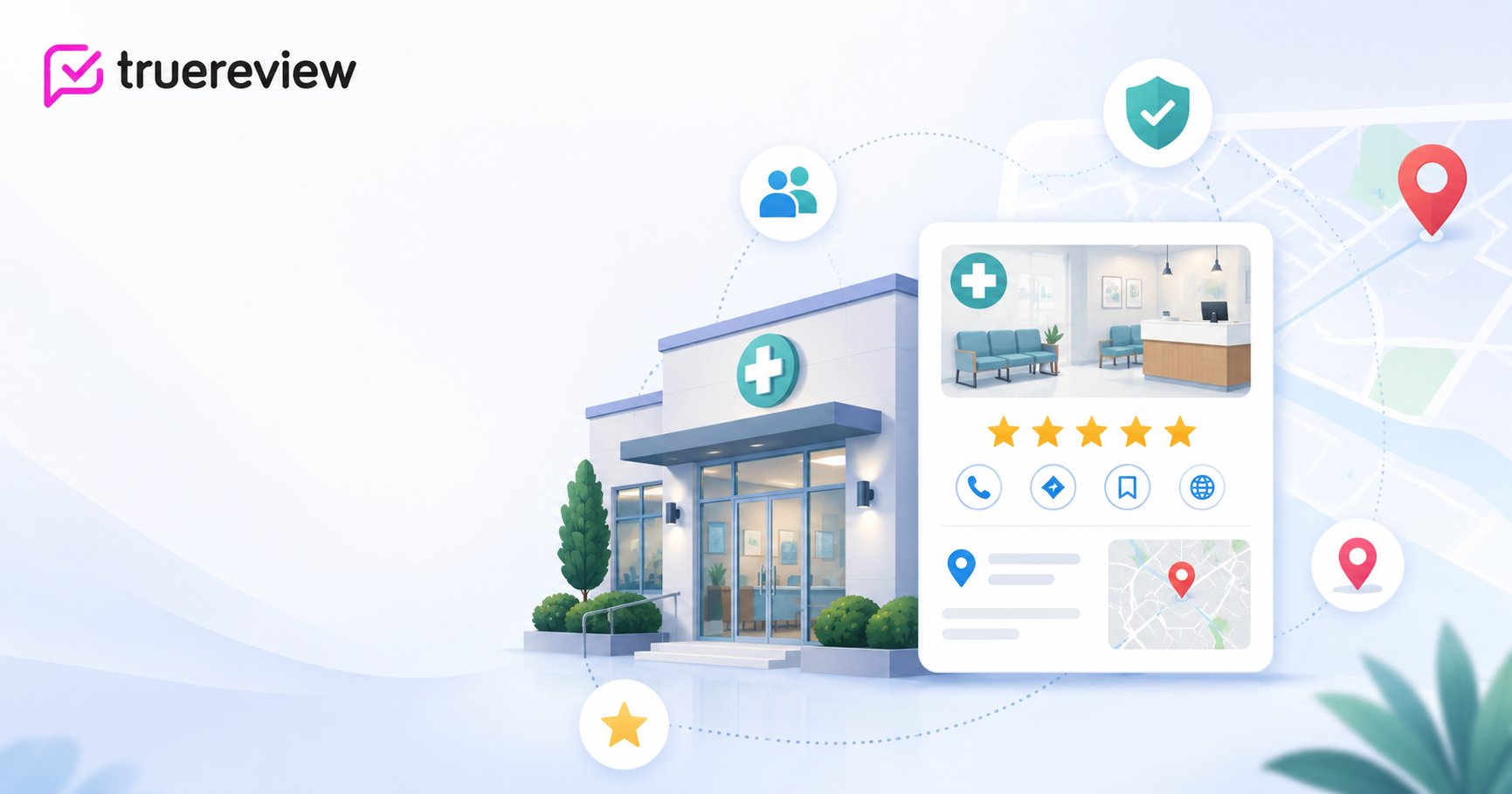
Google My Business (now Google Business Profile) is essential for doctors: it's where patients find, vet, and choose you. The key for medical practices is doing it compliantly — request reviews transmitting only basic contact details, never discuss any patient's care in responses, and keep privacy front and center. Done right, it builds the trust patients look for without crossing privacy lines.
For a medical practice, a Google Business Profile is both a major opportunity and a compliance minefield. Patients increasingly choose doctors the way they choose restaurants — by reading reviews and scanning ratings — so visibility matters. But healthcare adds privacy obligations to everything you do with reviews and responses. This guide covers why GBP matters for doctors, how to get patient reviews compliantly, how to respond without violating privacy, and the guardrails to keep in place. It is general information, not legal or compliance advice.
Patients now research doctors online before booking, and your Google Business Profile is usually the first thing they find. A strong, well-reviewed profile builds trust before the first appointment; a thin or neglected one sends patients elsewhere. The catch is that medical practices can't approach reviews the way a restaurant does — privacy rules shape how you request reviews and, especially, how you respond. Here's how to get the visibility benefits while staying carefully within the lines.
Why GBP matters for medical practices
- It's how patients find you. Local searches for "[specialty] near me" surface Google Business Profiles first, in the map pack.
- Patients vet you by reviews. Rating and review content heavily influence whether an anxious patient chooses your practice.
- It builds trust before the visit. A complete profile with genuine reviews reassures patients you're established and well-regarded.
- It drives bookings. Click-to-call, directions, and hours turn a search into an appointment.
Setting up and optimizing for doctors
The fundamentals mirror any local business — claim the profile, choose accurate specialty categories, complete hours, services, and a clear description, and add professional photos of the practice. For multi-provider or multi-location practices, structure profiles correctly so each location is findable. Keep everything accurate; patients and Google both penalize wrong information.
Getting patient reviews compliantly
You can absolutely ask patients for reviews — the key is how. The guardrails:
1
Transmit only basic contact details
A compliant review request transmits only what's needed to send it — typically the patient's name, phone, or email. No diagnosis, treatment, or health information should ride along with the request.
2
Keep the ask general
Invite the patient to share their experience. Don't reference their specific condition or visit details in the request.
3
Let patients control what they share
Patients may choose to mention their care in a review — that's their right. Your job is never to prompt or reveal it yourself.
4
Use a HIPAA-aware tool and a BAA where appropriate
If you use software to send requests, use one built to handle only minimal contact data, and put a business associate agreement in place when needed.
Note the careful framing: a practice can run a review program that's HIPAA-aware — transmitting only name, phone, and email — without ever claiming "HIPAA compliance," which is a determination that depends on your full environment.
Responding without privacy violations
This is where doctors get into trouble. The rule is strict: never acknowledge that someone is a patient or discuss any aspect of their care in a public response — even to correct an inaccurate review, and even if the reviewer revealed details themselves. Confirming a treatment, disputing their account of a visit, or referencing their condition can all be privacy violations. Safe responses are generic and move the conversation offline:
- "Thank you for your feedback. We take all patient concerns seriously and invite you to contact our office directly so we can assist you."
- "We're committed to providing every patient with excellent, respectful care. Please reach out to our office directly to discuss any concerns."
Notice these never confirm the person was a patient. That's the line you don't cross.
Tools that keep you compliant
Manually running a privacy-conscious review program is doable but error-prone. Purpose-built review software helps by transmitting only minimal contact data, keeping requests generic, and centralizing responses so your team replies consistently and safely. For the broader picture, see our healthcare reputation management guide.

Privacy-conscious review requests for medical practices
TrueReview sends patient review requests transmitting only name, phone, and email — no health information — so your practice builds genuine reviews the HIPAA-aware way. A BAA is available on request. Start a free 14-day trial.
The bottom line
For doctors, a Google Business Profile is essential to being found and chosen — but it has to be managed with privacy front and center. You can request patient reviews by transmitting only basic contact details, you must never reveal or confirm anything about a patient's care in responses, and a HIPAA-aware tool plus a BAA where appropriate keeps the program on safe ground. Handle it that way and your profile builds the patient trust that fills your schedule, without ever putting privacy at risk. This is general guidance; consult your own compliance counsel for your practice.
FAQ
Common questions about Google Business Profile for doctors.
Is Google Business Profile important for doctors?
+
Yes — it's often the first thing patients find when searching for a doctor, and it heavily influences whether they choose your practice. Patients increasingly vet physicians by reading reviews and scanning ratings, and a complete, well-reviewed profile builds trust before the first appointment. It also drives bookings through click-to-call, directions, and hours. For medical practices, the key is getting these benefits while managing reviews and responses compliantly.
How can doctors get patient reviews without violating HIPAA?
+
Ask patients to share their experience while transmitting only basic contact details — typically name, phone, or email — with no diagnosis, treatment, or health information attached to the request. Keep the ask general rather than referencing a patient's specific condition. Patients may choose to mention their care themselves, which is their right, but the practice should never prompt or reveal it. Using a HIPAA-aware tool and a business associate agreement where appropriate helps keep the program safe. This is general information, not compliance advice.
How should a doctor respond to a patient review?
+
Generically, and without ever confirming the person is a patient or discussing any aspect of their care — even to correct an inaccurate review, and even if the reviewer shared details themselves. Confirming treatment or disputing their account can be a privacy violation. A safe response thanks them for the feedback, notes that you take concerns seriously, and invites them to contact the office directly, without acknowledging the care relationship.
Can medical practices use review software?
+
Yes, but it should be built to handle healthcare appropriately — transmitting only minimal contact data (name, phone, email), keeping requests generic, and centralizing responses so the team replies safely and consistently. Practices should also put a business associate agreement in place where appropriate. Software like TrueReview is designed to send patient review requests the HIPAA-aware way, with a BAA available on request.
What does 'HIPAA-aware' mean for review requests?
+
It means a review program designed to respect privacy by transmitting only the minimal contact information needed to send a request — name, phone, and email — and never any health information. It's a deliberate distinction from claiming 'HIPAA compliance,' which is a broader determination that depends on a practice's entire environment and safeguards. A HIPAA-aware review process keeps protected health information out of the request entirely, which is the safest approach for collecting patient reviews.