BLOG POST
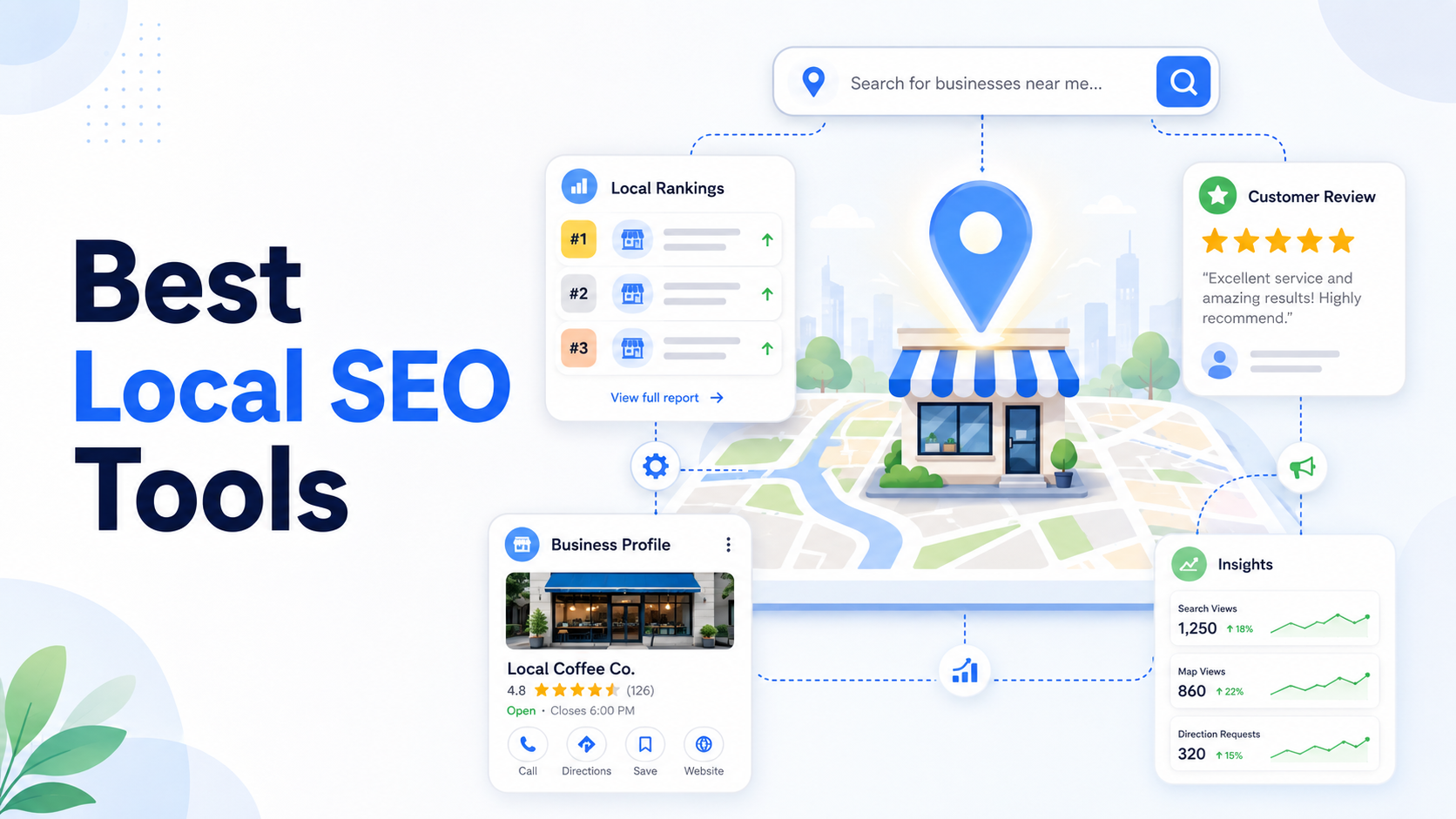
Google Maps marketing is the single highest-leverage local marketing investment most brick-and-mortar businesses can make. It drives discovery when prospects search "near me," determines which businesses appear in the local 3-pack, and increasingly feeds AI-generated search recommendations. A business with a strong Google Maps presence captures prospects at the moment they're deciding where to go; a business with a weak presence is invisible to them.
This guide covers Google Maps marketing in 2026: how Google's local algorithm actually decides who ranks, the Google Business Profile foundations that matter, the review-driven signals that move rankings, the common technical errors that quietly stall growth, and the compliant operational discipline that compounds over months.
The term covers two overlapping surfaces:
Google Maps itself — the standalone Google Maps app and maps.google.com, where users search for businesses with explicit local intent. Prospects open Maps when they already know they want to find something nearby.
The local pack and Maps results within Google Search — the 3-pack of local businesses that appears at the top of search results for queries with local intent ("plumber near me," "best Thai food downtown," "dentist accepting new patients"). For most local businesses, the local pack drives the majority of their search-driven discovery traffic. Prospects rarely scroll past it.
Google Maps marketing is the practice of optimizing your Google Business Profile (formerly Google My Business) so you rank in both surfaces. The profile is the single source — the same business information feeds Maps, the local pack, Google's Knowledge Panel, and increasingly AI-generated search overviews.
For broader context on how Google Business Profile optimization works beyond Maps specifically, see our complete guide to Google Business Profile. Before you optimize a listing, make sure the name is clear to use — here's how to check business name availability.
Google's local search algorithm uses three primary signals to rank businesses in Maps and the local pack. Understanding how they interact is the foundation of effective Maps marketing.
How well your business matches what the prospect searched for. Determined by your profile category (primary and secondary), your business name, the services and products listed on your profile, the keywords used in your business description and posts, and the topics mentioned in your reviews. A "pizza restaurant" with reviews mentioning "best deep-dish in town" is more relevant to "deep dish pizza" searches than a generic Italian restaurant.
How close your business is to the prospect's location (or to the location they specified in the search). For "near me" queries, distance is the dominant signal — Google strongly favors closer businesses, especially within a 1-2 mile radius for dense urban markets and 5-10 miles for suburban or rural ones. You can't change your physical location, but you can specify a service area for businesses that deliver or serve customers at their locations.
How well-known and trusted your business appears to be. This is the signal you have the most control over, and it's heavily driven by reviews. Prominence factors include:
The takeaway: distance you can't control, relevance you optimize through categories and content, and prominence you build over months through reviews, profile completeness, and engagement. Most businesses underinvest in the prominence signals — specifically reviews — and that's why their Maps rankings stay flat.

TrueReview automates compliant SMS and email review requests after every customer event, integrates with 8+ booking and CRM platforms, and surfaces incoming reviews in a unified dashboard with AI-assisted response drafts. Start a free 14-day trial — setup takes about 15 minutes.
The Google Business Profile is the foundation of all Maps marketing. Without a verified, complete profile, you're invisible. With a properly set up one, you have the substrate Google needs to rank you.
Go to business.google.com and sign in with the Google account that will own the business. Search for your business — if it already exists in Google's data (which is common for established businesses), claim it. If it doesn't, create a new profile.
The business name, address, and phone number (NAP) need to match exactly what appears on your website, your invoices, and your other online listings. Inconsistent NAP across the web is one of the most common causes of weak local rankings. The address itself should match what postal services use — including suite numbers, zip+4 codes, and proper street designations.
For businesses that don't serve customers at a physical address (mobile service businesses, home-based businesses), you can hide the address and specify a service area instead — either by zip code, city, or geographic radius.
Google requires verification before your profile can rank. Verification options have expanded considerably:
The exact options available depend on your business category, location, and history. Google chooses which methods to offer.
The single biggest relevance signal is your primary category. Google has hundreds of category options, and picking the most specific one that matches your business is critical. "Italian restaurant" is better than "Restaurant." "Personal injury attorney" is better than "Attorney." "Pediatric dentist" is better than "Dentist."
The primary category drives the bulk of your relevance signal for the queries that produce the most volume in your vertical. Get it wrong and even a strong review profile won't surface you for the right searches.
You can add additional categories beyond the primary. These should be genuine descriptions of what you do — not keyword stuffing. A pediatric dentist might add "Dentist" and "Cosmetic Dentist" as secondary if they actually perform that work. Don't add categories you don't serve; Google's algorithm detects inconsistency between claimed categories and review content over time, and irrelevant categories can hurt rather than help.
Hours of operation, special hours for holidays, business description, services list, products list, photos (interior, exterior, team, work samples), attributes (wheelchair accessible, free Wi-Fi, accepts credit cards, by appointment only), payment methods. Every field you fill in is a relevance signal for related queries and a prominence signal indicating active maintenance.
Special attention to photos: profiles with 100+ photos get materially more profile views, calls, and direction requests than profiles with a handful. Add fresh photos monthly — not just static brand photography, but actual recent work, team photos, and customer-facing imagery.
Profile completeness gets you eligible to rank. Reviews are what actually move you up the local pack. The signals that compound:
Lifetime review volume. Pass 100 lifetime reviews to break out of the "still building" perception bucket. Beyond 500, additional volume produces diminishing returns relative to recency and response rate.
Monthly review velocity. 10-20 new reviews per month is the right baseline for most single-location local businesses. Below that, you fall behind on recency. Above 50 reviews per month for a small business can trigger Google's spam detection if the velocity is unnatural for your size.
Average rating. 4.5+ stars is the comfort zone. 4.0-4.4 is acceptable but starts showing ranking pressure. Sustained sub-4.0 ratings demote profiles meaningfully.
Recency. Profiles with no new reviews in 90 days are demoted regardless of lifetime count. Recency outperforms total volume as a signal after the first hundred or so reviews.
Response rate. 90%+ universal response activity (responding to positive, neutral, and negative reviews alike) is the target. Below 70% looks inconsistent and signals operational neglect.
Response time. Within 24-48 hours of posting. Anything past 72 hours signals disengagement.
Review content keywords. Reviews that mention specific services, products, or attributes (where appropriate) contribute relevance signals. A dentist whose reviews mention "Invisalign" ranks better for "Invisalign" searches than one whose reviews don't.
The takeaway: a business with 200 recent reviews at 4.7 stars and consistent response activity will outrank a competitor with 50 stale reviews at 4.2 stars in the same physical area, holding everything else equal. The signal is the four operational metrics — not just volume.
For the complete review acquisition playbook with channel-specific tactics, see our guide to getting more Google reviews.
The Federal Trade Commission's Rule on the Use of Consumer Reviews and Testimonials took effect in October 2024. It made federal-level penalties apply to practices that were previously only platform-level violations. The Rule applies directly to Google Business Profile reviews and to any Maps marketing that involves soliciting or displaying customer feedback. It prohibits:
Civil penalties can reach into the tens of thousands of dollars per violation. The FTC has been actively enforcing since the Rule took effect, with several public actions against reputation management companies in 2025.
What this means for Maps marketing: any "Maps optimization service" that promises to filter out negative reviews, generate reviews, or provide "reputation insurance" is creating federal-level legal exposure on top of platform-level risk. The compliant path to better Maps rankings is to ask every customer for an honest review through a standardized workflow — no filtering, no incentives, no value exchange.
Some negative reviews violate Google's content policy — off-topic content, conflict of interest, harassment, spam patterns. TrueReview's Review Radar feature scans incoming reviews for these violations and guides you through reporting them to Google. (You do the reporting yourself, with guidance — Review Radar surfaces the issue, you decide what to do.) Start a free 14-day trial.
The patterns that quietly stall Maps growth across most local businesses:
Inconsistent NAP across the web. Your business name, address, and phone number should match exactly across your Google Business Profile, website, Facebook page, Yelp listing, BBB profile, industry-specific platforms, and any other directories where your business appears. Variations — "123 Main St" vs "123 Main Street" vs "123 N. Main Street" — create citation inconsistency that suppresses Maps rankings.
Wrong primary category. Choosing too generic a category ("Restaurant" instead of "Mexican Restaurant," "Contractor" instead of "Roofing Contractor") loses relevance signal for the searches that produce the most volume. The primary category is the single most important relevance signal you control.
Category keyword stuffing. Adding secondary categories you don't actually serve to chase keywords. Google detects this through review content analysis over time, and irrelevant categories can hurt rather than help.
Business name keyword stuffing. Adding keywords to your business name ("Joe's Plumbing Services Best Plumber Near Me") is a violation of Google's policy and risks profile suspension. Use your actual legal or DBA business name only.
Review gating. "How was your experience?" surveys that filter out unhappy customers before they reach the public platform. Direct violation of Google's policy and the FTC's 2024 Rule. Common in the reputation-management industry, which is why the FTC has been actively enforcing.
Offering incentives for reviews. Even when the incentive isn't conditional on a positive review, it violates Google's policy and the FTC's Rule. Eventually triggers algorithmic detection and removal.
Buying reviews. Review-buying services produce reviews that fail Google's detection eventually. Profiles get hit with mass algorithmic removals; sustained patterns trigger profile suspensions. FTC 2024 Rule made this federally illegal.
Set-and-forget profile. Not adding new photos, not posting updates, not responding to reviews, not updating hours for holidays, not adding new services as they launch. Google's algorithm reads active maintenance as a prominence signal; static profiles fall behind even with strong review volume.
Ignoring questions and Q&A. The Q&A section of your profile is publicly answerable — anyone can post a question, anyone can answer. If you don't actively answer customer questions there, competitors or random users will, sometimes inaccurately. Monitor and answer Q&A weekly.
Skipping Google Posts. The Posts feature (updates, events, offers, products) is underutilized by most local businesses. Each post is a relevance signal and shows up directly in your Maps and Knowledge Panel listing. Even one post per week meaningfully outperforms zero.
Photo neglect. Profiles with 100+ photos materially outperform profiles with 10 in profile views, direction requests, and calls. Fresh photos monthly — not just stock imagery, but actual recent work, team, and customer-facing scenes.
Manual review workflow that breaks under volume. Personal asks work fine at 20 customer interactions per month. Past 100, manual asks become impossible to maintain consistently — some weeks you ask everyone, some weeks you ask no one. Flat review velocity never moves Maps rankings. Software-driven automation is the natural evolution past that threshold.
The local pack (the 3-pack of businesses appearing in Google Search) and the Google Maps app surface ranking results slightly differently, and Maps marketing benefits from understanding both.
The local pack appears for searches with detected local intent on Google Search. It typically shows three businesses, sometimes preceded by Google's AI-generated overview and Local Service Ads. Distance is the dominant signal for "near me" queries, with prominence (especially reviews) as the tiebreaker among nearby businesses.
The Maps app shows a larger result set when users search directly within Maps. Distance still matters, but users can pan and zoom to explore different areas, which means prominence signals like review volume and recency carry more weight relative to raw proximity.
Mobile vs desktop: mobile local searches are more proximity-weighted than desktop. Mobile prospects tend to want "the closest acceptable option," while desktop users explore more broadly. Optimization choices that prioritize prominence over hyper-local proximity (broader category, larger service area) tend to benefit desktop visibility.
"Near me" without a stated location: Google uses the user's device location. For mobile, this is typically GPS-precise. For desktop, it's IP-based and less precise. Your Maps ranking for someone two blocks away can be entirely different from your ranking for someone two miles away, even for the same query.
Some industries have additional layers that change Maps marketing.
Healthcare. Specific category selection matters more than in most verticals — "Family Practice Physician" vs "Pediatrician" vs "Internal Medicine Physician" each rank differently. HIPAA constrains response language. For deeper coverage, see our healthcare reputation management guide.
Legal services. Practice-area specificity ("Personal Injury Attorney," "Criminal Defense Attorney," "Family Law Attorney") drives meaningful ranking differences. State bar advertising rules constrain response language. See our reputation management for criminal defense attorneys guide.
Real estate. Individual agent profiles work alongside brokerage profiles in Maps results. Most top-producing agents maintain their own profile in addition to the brokerage. Zillow and Realtor.com reviews matter as much as Google for residential agents — see our guide to Zillow and Realtor.com reviews.
Restaurants. Photos drive disproportionate engagement for restaurant Maps profiles — food photos, interior shots, exterior signage. Menu attributes (dietary options, cuisine specifics) feed relevance for niche queries. For coverage, see our guide to Google restaurant reviews.
Home services. Service-area businesses (rather than storefront) need careful service-area configuration. BBB, Angi, and HomeAdvisor citations in addition to Google strengthen the prominence signal.
Salon, spa, and medical spa. Booking platform integration (Mangomint, Boulevard, Vagaro) feeds reviews from real appointments, which produces strong credibility. Service-specific photos drive engagement at higher rates than generic interior shots.
Multi-location businesses. Each location needs its own Google Business Profile with location-specific information, photos, reviews, and posts. Centralized management is possible through the Business Profile dashboard, but the local profiles themselves can't be merged. Consistency across locations (branding, response tone, posting cadence) reads as operational discipline.
Deeper coverage by topic:
The pillar framework: our complete guide to review management covers the five-pillar operational framework (collect, monitor, respond, analyze, comply) in detail.
Google specifically: our complete guide to Google business reviews, our guide to Google Business Profile optimization, and our guide to getting more Google reviews.
Online reviews broadly: our complete guide to online reviews for businesses covers the multi-platform landscape.
Platform selection: our guide to the best review sites for local businesses covers which platforms to prioritize by vertical.
Asking and responding: our guide to asking for reviews and our review response templates guide with 30+ ready-to-use templates.
Removing problematic reviews: our guide to removing bad Google reviews.
By industry: healthcare, legal, real estate, restaurants.
Five things to operationalize, in order of leverage:
Google Maps marketing isn't a one-time project. It's an operational discipline that compounds over months into measurable gains in local pack visibility, Maps app discovery, and prospect conversion. The businesses pulling ahead in their local market are the ones with structured review workflows, fully-complete profiles, accurate categories, and universal response cadences. The ones falling behind are still treating their Google Business Profile as something they set up once and forgot.
TrueReview automates compliant SMS and email Google review requests with one initial ask and one polite reminder. Integrates with Mangomint, Boulevard, Vagaro, Zillow, Realtor.com, and 8+ other booking and CRM platforms. AI-assisted response generation with human-review workflow. Review Radar surfaces Google policy violations. HIPAA-aware workflows for healthcare with BAAs available. Agency and multi-location support with white-label options. Start a free 14-day trial — setup takes about 15 minutes.