BLOG POST
Google reviews are the single most visible representation of your business online. They appear at the top of search results when someone Googles your name, on Google Maps when someone searches "near me," in the local 3-pack that dominates local search, and increasingly in the AI-generated answers that summarize your business for users who never even click through to your profile.
For most local businesses, Google reviews carry more weight than any other marketing asset. They influence rankings in Google's local algorithm. They shape conversion when a prospect reaches your Google Business Profile or website. They surface operational issues earlier than any other feedback channel. And they compound over time — a business with a strong, recent review base pulls further ahead of competitors each quarter.
This guide is the complete reference for 2026: how Google reviews actually work, how Google ranks them, the compliance rules every business needs to understand, how to ethically grow your review base, how to respond well, what to do about reviews that violate policy, and the patterns that distinguish review programs that compound from review programs that quietly stall.
Google reviews are unpaid, voluntary ratings and written feedback that customers leave on a business's Google Business Profile. They're tied to the reviewer's Google account, displayed publicly, and integrated across Google Search, Google Maps, and the local 3-pack. The mechanics that matter:
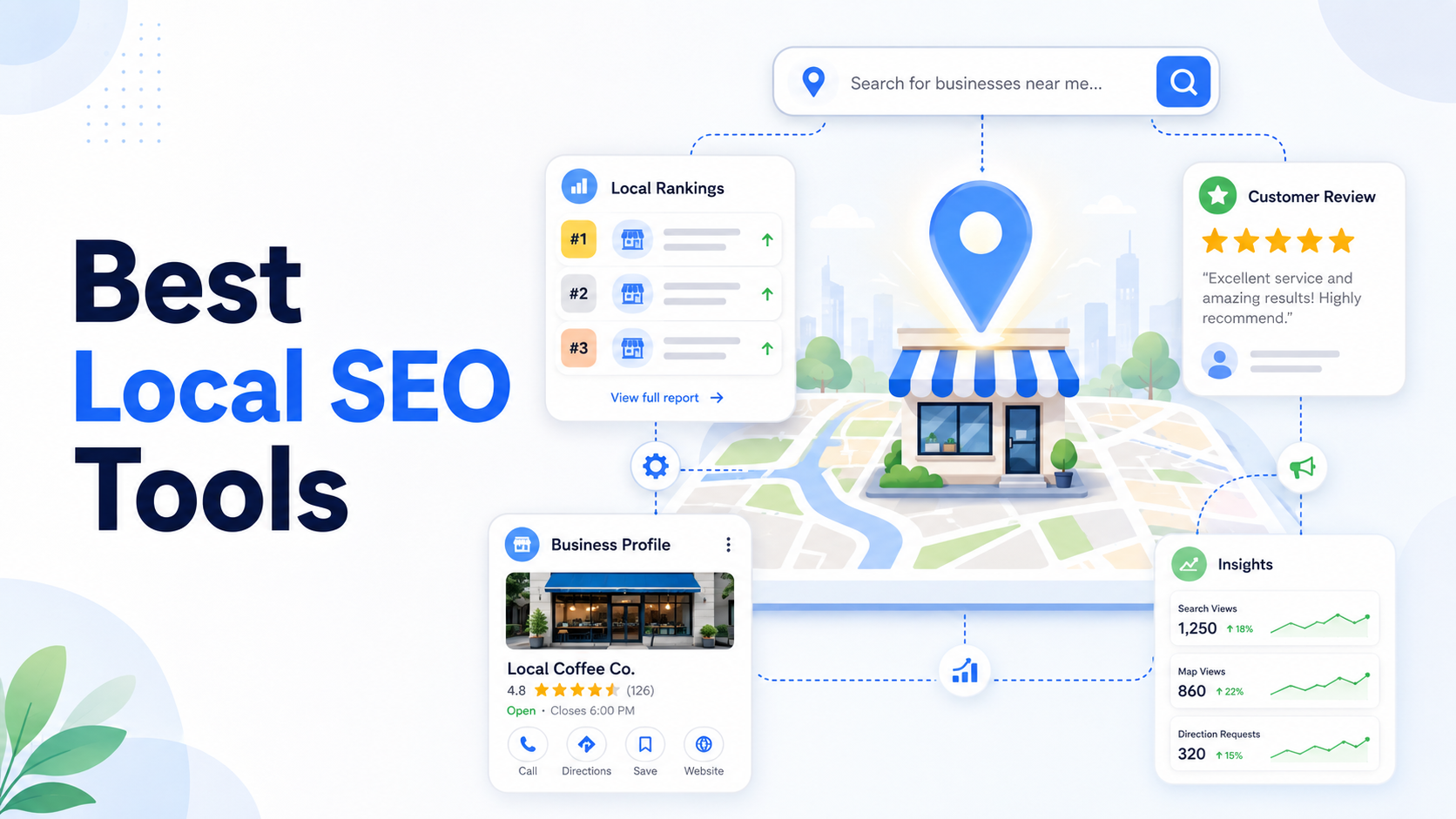
Where they appear. Google reviews show up in four places: the Google Business Profile (the panel that appears in Search when someone searches your business by name), the Google Maps interface (both web and app), the local 3-pack (the three businesses Google features for local-intent searches), and AI overviews / AI-generated answers that increasingly pull from Google's structured business data.
Who can leave them. Anyone with a Google account can leave a review. There's no purchase verification, no transaction proof, no requirement that the reviewer actually be a customer. Google's spam detection catches some fake reviews algorithmically, but the system is imperfect, and policy-violating reviews persist regularly until they're flagged and reviewed.
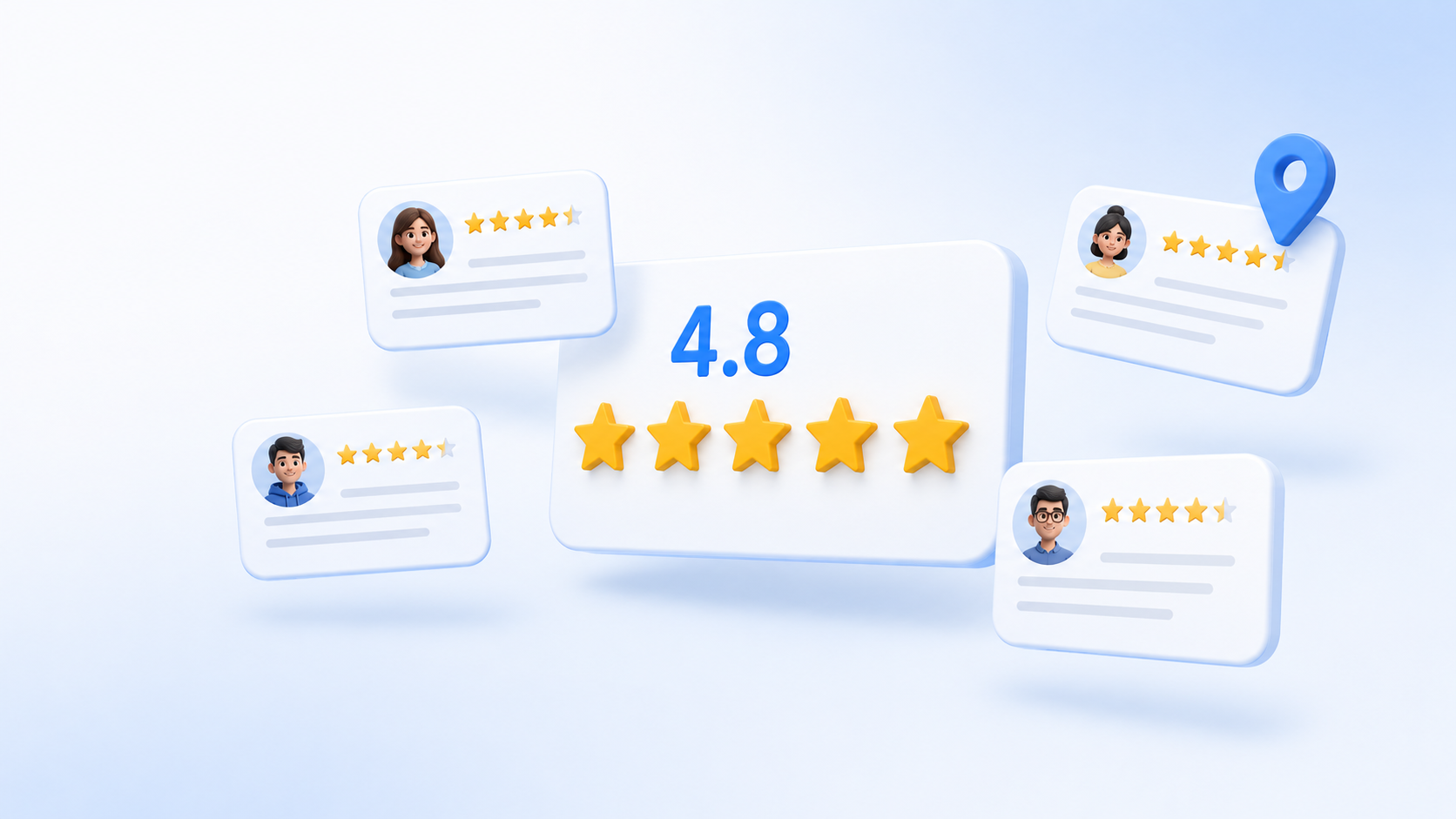
Star rating mechanics. Reviews are rated on a 1-5 star scale. Your overall rating is the simple average of all undisplayed and displayed reviews. Reviews removed by Google (algorithmically or by flag) don't count toward the average. Star ratings appear in Google Business Profile and Google Maps with one decimal of precision (4.7, 4.3, etc.).
The review owner can edit or delete. Reviewers can edit or delete their own reviews at any time. You as the business owner cannot directly delete a review — you can only flag it for Google's review and reach out to the reviewer privately. For a step-by-step walkthrough, see our guide to deleting or removing bad Google reviews.
Reviewer identity is partial. Reviewers display their first name and last initial (or sometimes a full name they've set in their Google account). Their other reviews are publicly visible on their profile — one click reveals every review they've ever left, which is how reviewers with suspicious patterns (consistently 1-star, all in one geographic cluster, very new accounts) get flagged as potentially fake.
Yelp, Facebook, BBB, TripAdvisor, Healthgrades, Avvo, Zillow — there are dozens of review platforms. For most local businesses, Google reviews carry more weight than all the others combined. Three structural reasons.
Distribution. Google Search has substantially more visibility than any other platform. When prospects research a local business, the first place they look — almost universally — is Google. The reviews on your Google Business Profile reach more prospects than reviews on any other platform, by a wide margin.
Algorithm coupling. Google reviews don't just sit on Google. They directly influence Google's local search rankings. Volume, recency, response rate, and rating are all signals in the local algorithm. A strong Google review profile produces ranking gains that produce more visibility that produces more reviews — a compounding loop. No other platform produces that same loop in Google search.
AI integration. Google's AI overviews, Bard, and AI-powered search increasingly pull from Google's structured business data when generating recommendations. The reviews on your Google Business Profile are what AI assistants reference when someone asks them for a local recommendation. Other platforms' reviews are not part of this dataset to the same degree.
That said, Google reviews are not the only ones worth managing. Industry-specific platforms (Healthgrades for medical, Avvo for legal, Zillow for real estate, TripAdvisor for restaurants, Mangomint and Vagaro for salon and medical spa) matter substantially within their verticals. Yelp still drives meaningful traffic for restaurants, bars, and certain service categories. Facebook reviews remain relevant for older demographics. The right approach is to make Google the primary investment and treat the others as the supporting layer.
Three distinct decisions Google makes that businesses often confuse.
Google removes reviews algorithmically when its systems flag policy violations. The most common reasons reviews disappear:
Algorithmic removal is the larger cause of disappearing reviews than business-flagged removal. When you lose 20 reviews overnight without flagging any, it was almost certainly Google's algorithm.
The reviews that appear at the top of your Google Business Profile aren't just the most recent ones. Google's display algorithm considers:
You don't directly control the display order, but you influence it indirectly through consistent response activity and by encouraging reviewers to include details and photos.
This is the most consequential decision Google makes about your reviews, and the one with the most leverage. The signals that matter, in rough order of weight:
In October 2024, the Federal Trade Commission's Rule on the Use of Consumer Reviews and Testimonials took effect. It added federal-level penalties to practices that were previously only platform-level violations. The Rule prohibits:
Civil penalties can reach into the tens of thousands of dollars per violation. The FTC has been actively enforcing the Rule since it took effect, with public actions against several reputation management companies in 2025.
The Rule isn't aimed at small local businesses doing things right. It's aimed at the ecosystem of fake-review services, reputation management firms that practice gating, and businesses that systematically suppress legitimate negative feedback. But the language is broad enough that businesses operating in the gray areas — offering small "thank you" gift cards in exchange for reviews, filtering customers through "happiness surveys" before requesting public reviews, asking only happy customers for reviews after a service call — have meaningful exposure.

TrueReview was built compliance-first. Review requests go to all customers, not a filtered subset. No gating, no incentives, no AI-generated fakes. Review Radar scans incoming reviews for Google policy violations and guides you through reporting. HIPAA-aware workflows for healthcare with BAAs available. Start a free 14-day trial.
The mechanics of asking customers for Google reviews are well-established at this point. What's changed in 2026 is the line between compliant and non-compliant practices — the FTC Rule and Google's tightened enforcement have moved that line.
For a deeper framework on how to ask, see our guide to asking for reviews.
Response activity is one of the highest-leverage and most-skipped pieces of a review program. The basics:
Respond to everything. Positive, neutral, and negative. Universal response activity is a real ranking signal, and it tells future customers (who read your responses before they call) that you take feedback seriously.
Respond within 24-48 hours. Faster signals active operations. Responses days or weeks later read as performative.
Reference specifics from the review. "Thanks for the kind words about {staff member}" or "Sorry to hear about the wait time on {date}" shows you actually read it.
Match tone to the review. Warm reviews get warm responses. Formal reviews get formal responses. Mismatch signals templates.
For negative reviews: acknowledge the experience, apologize for what's apologizable, offer to take the conversation private, and don't get defensive. The audience for your negative-review response isn't the reviewer — it's every future prospect who reads the thread.
For regulated industries: healthcare, legal, and financial services responses can't disclose customer identity, transactions, or treatment specifics without creating compliance issues. Generic acknowledgment plus "please contact our office to discuss further" is the standard pattern.
For 30+ ready-to-use templates organized by review type and industry, see our review response templates with 30+ examples.
Some negative reviews violate Google's content policy — off-topic content, conflict of interest, harassment, spam patterns. TrueReview's Review Radar feature scans your incoming Google reviews for these violations and guides you through reporting them to Google. (You do the reporting yourself, with guidance — Review Radar surfaces the issue, you decide what to do.) Start a free 14-day trial.
Some negative reviews aren't legitimate criticism — they violate Google's content policy. The path:
Reviews you can legitimately flag:
Reviews you cannot legitimately flag:
Abusing the flag process — trying to remove reviews you simply don't like — gets your flag credibility downweighted by Google over time and can attract additional scrutiny. Reviews from established contributors carry disproportionate weight, both with shoppers and in Google's ranking signals — the Google Local Guide program explains how those contributor levels and badges work, and why a badged review outperforms an anonymous one.
To flag a review for removal:
Google reviews the flag and either removes the review or notifies you that it stays. The process typically takes 3-7 business days. Success rates aren't 100% — Google preserves reviews unless they clearly violate policy. For the full removal playbook (including reviewer-path removals and legal escalation when needed), see our complete guide to removing bad Google reviews.
Profile suspension is the highest-stakes outcome of a Google reviews mistake. Reinstating a suspended profile typically takes 5-14 days with no guarantee of approval — weeks of lost visibility during peak season can cost a small business significantly. The most common causes:
Fake review patterns. Sudden spikes of 5-star reviews from accounts with no history, all written in similar language, or all originating from the same IP range. Even when you didn't buy the reviews, the algorithmic pattern looks identical to a paid review service. Profiles get suspended on pattern match.
Repeated incentivized review activity. Customers mentioning gifts, discounts, or rewards in their review content gets flagged. Eventually, the pattern triggers suspension.
Gating that customers complain about. When customers realize they've been filtered ("I tried to leave a 2-star review and got redirected to a private feedback form"), they sometimes report it to Google. Pattern-level enforcement follows.
Aggressive flag abuse. Reporting too many legitimate reviews as policy violations gets your flag credibility downweighted and can attract scrutiny to your overall profile management practices.
Profile manipulation outside reviews. Keyword stuffing in the business name, fake addresses, multiple profiles for the same business. Often co-discovered with review pattern investigations.
Google business reviews are the primary signal for most local businesses, but they aren't the only one. The platform-specific deep-dives we've published:
Within Google: if you run a restaurant, Google restaurant reviews and Google reviews for restaurants cover the hospitality-specific nuances. If you need to download or archive your existing reviews, here's how to export your Google reviews.
Other platforms: real estate agents working in residential should see our deep-dive into Zillow and Realtor.com reviews — the second-largest review platform after Google for that industry. For Yelp-specific dynamics, see our Yelp reviews guide.
For the pillar framework: our complete guide to review management covers the five-pillar operational framework that includes Google reviews as the primary surface.
Five things to operationalize, in order of leverage:
Google business reviews are the most visible, most algorithmically-coupled, most prospect-facing trust signal a local business has in 2026. They reward consistent execution and punish shortcut-taking. The businesses pulling ahead in their local market are the ones generating fresh reviews steadily, responding to all of them quickly, and operating cleanly within Google's policy and the FTC's Rule. The ones falling behind are either skipping the operational discipline or quietly violating compliance and waiting for the enforcement action that eventually arrives.
TrueReview automates compliant SMS and email review requests after every customer interaction, monitors Google plus 8+ other platforms in a unified dashboard, generates AI-assisted response drafts you review before publishing, and includes Review Radar for spotting Google policy violations on incoming reviews. HIPAA-aware workflows for healthcare, agency and multi-location support with white-label options. Start a free 14-day trial — setup takes about 15 minutes.